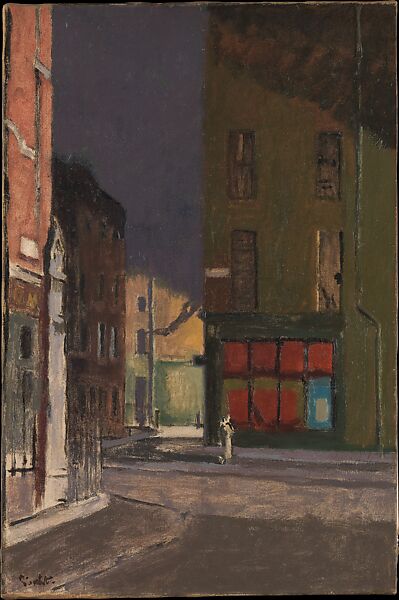
Maple Street, London, circa. 1915–23
Metropolitan Museum of Art USA
Walter Richard Sickert British
This desolate urban view is a rare night scene by Sickert. It depicts an intersection near studios the artist rented in London from 1915 onward. Around 1923, he repeated the composition in two prints, he borrowed the title of the popular song O Sole Mio for one of these prints, a humorous allusion to its illumination by a streetlamp. Sickert was believed by some to be the infamous serial killer Jack the Ripper due to his obsession with the character and surroundings as subject matter.
Open Letter from Pillijoki, Finland
Dear All, I am in Finland on a beyond organic permaculture farm, fighting the good fight in devising ways of feeding humanity and the Earth's sentient beings without plundering natural resources to extinction. We have just discovered that there is only a metre of water left in our well, no water mains out here, who says climate change is not real, it has been sunny and dry since I arrived on 24th of July and there has been no rain to speak since May. I have limited access to the internet hence my protracted absence from the site. However, the good news is it has rained quite hard in two less than half-hour bursts and the sky is now dark and leaden with low cloud seemingly bursting with rain and thunder rumbling in the distance. The Finnish mythology god of Thunder Ukko [the cat has the same name, smoky grey tabby with a distinct resemblance to thunderous skies] is hopefully about to breach the barrels he has rolled out of his cellar and send a torrent of much-needed water.
Kind Regards Redbeck
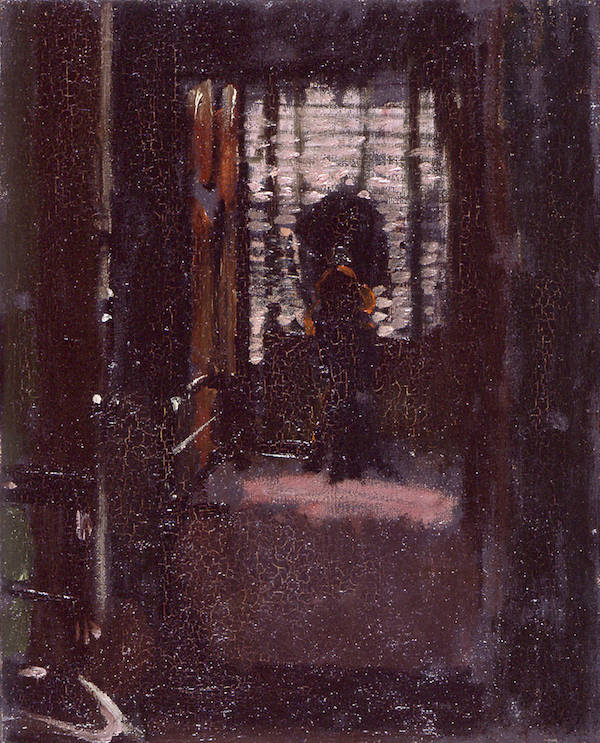
Jack the Ripper's Bedroom.
Walter Sickert 1907
It was obviously no secret that Sickert was fascinated with Jack the Ripper’s murders. Having moved to Camden Town in the early 1900s, he was moved to paint "Jack the Ripper’s Bedroom" after his landlady had told him that the Ripper was the previous tenant of the very room in which he was staying.
Emily Dimmock’s butchered body was found in her bed in Camden In September 1907, while Sickert was still living there. Her killing became known as "The Camden Town Murder" and Sickert created several paintings and drawings relating to the crime. The work became the subject of much controversy in the media, but also consolidated Sickert’s reputation as a leading realist painter.


