Page 3 of 4

Re: All Creatures Great and Small

Posted: 14 Nov 2017 10:04
by hope
Honeyguides

image.jpeg

Honeyguide, small plainly coloured Old World bird of the family Indicatoridas, known for it's habit of leading man
and some lower animals (notably the honey badger) to nests of wild bees.
Honeyguides are native to Africa, the Himalayas, and the East Indies.

The largest and best-known species is the 8-in. long (20-cm) black-throated African honeyguide. It leads tribespeople
to bee's nests, waits for them to open the hive, and then feeds on bits of honeycomb, bees, and larvae; it has a
special bacteria in in its stomach to aid in the digestion of beeswax.

Honeyguides lay eggs in the nests of hole-nesting birds and the young on hatching, kill their nest mates with special
needle-sharp bill hooks, they are then able to consume all the food brought by their foster parents.
Honeyguides are classified in the phylum 'Chordata,' subphylum Vertebrata, class Aves, order Piciformes, family
Indicatoridae.


More info on;
https://en.m.wikipedia.org/wiki/Honeyguide
Re: All Creatures Great and Small

Posted: 19 Nov 2017 14:18
by hope
Chimpanzees warn friends of danger..

It was thought to be a skill unique to humans, but a new study has revealed that chimpanzees also warn other
members of their group when they suspect danger.

Researchers studying chimpanzees in Uganda found that in the presence of a fake snake, chimps warned other
members of the group - particular those that might be ignorant of the risk.
The findings suggest that systems for communication influenced by another's perspective may have emerged in
early hominoids before language-specific features.

See video below;

https://youtu.be/Qp5pIDKffPc

The team, designed a series of experiments observing wild chimps in Budongo Forest in Uganda.
They hid a fake snake in the forest and watched how the chimps reacted.
In the first experiment, they recorded how wild chimps used their bodies to indicate the location of the snake to
other chimps - a behaviour known as "marking,"

In one third of cases, signallers marked the location of the snake model, alternating their gaze between other
chimps and the snake.
In the second experiment, the researchers evaluated two different scenarios involving pre-recorded calls from
other chimps.
In one scenario, a hidden speaker played a call that suggested a nearby chimp knew about the snake.
In the second, the speaker played a chimpanzee call indicating ignorance.

Dr Catherine Cockford, lead author of the study, explained: "As chimpanzees walked along a path they first heard
the playback of a chimpanzee call and then as they continued to walk along the path, they saw a snake model,
The playback was either a call associated with snakes, indicating the caller was aware of the snake,or a similar
call not associated with snakes, indicating the caller was not aware of the snake."

Results showed that chimpanzees changed behaviour at the snake depending on the call type that they had heard
some seconds earlier.

Those that had heard the call suggesting ignorance from a group gave more warnings, though both vocal 'alerts hoos'
and body language.
These findings suggest that systems for communication influenced by another's perspective may have emerged in
early hominoids lineages before language-specific features.

Dr Cockford added: 'Our results demonstrate that chimpanzees have achieved a crucial step within the evolution
of language previously thought to be absent in all non-human communication-to fill another's knowledge-gap.'


image.jpeg

By Shivali, 15 Nov, 2017

Re: All Creatures Great and Small

Posted: 25 Nov 2017 22:03
by hope
What Eats Sea Turtles?

Sea turtles have shells to protect them, right? You might be wondering what would eat a sea turtle, as a sea turtle's
shell only goes so far to protect them. Unlike land turtless sea turtles can't withdraw into their shell for protection.
So this leaves their head and flippers especially vulnerable to predators. Discover the types of sea animals that prey
on sea turtles and how they can protect themselves from predators.

Animals that prey upon adult sea turtles includes the sharks(especially tiger sharks), killer whales and large fish.
Sea turtles are especially vulnerable as eggs and hatchlings, and sea turtles often lay their eggs on beaches.
Even though their nests my be a couple of feet deep in the sand, predators such as coyotes and dogs are savvy and
may dig them up.

If the sea turtles eggs do make it to hatchlings, the tiny hatchlings need to make a mad dash to the ocean, during
which they can be attacked by other predators, such as gulls.
Unfortunately, more than ninety percent of these hatchlings are known to be destroyed by their predators. In
addition to the animals previously mentioned, seabirds, raccoons and ghost crabs are other animals that are known
as natural predators against sea turtles.

Luckily the sea turtle's shell is their best friend. Their hard shell protects them from predators when danger is near.
Additionally, sea turtles are typically very skilled swimmers who are quick in their natural habitat, the ocean, which
helps them get rid of dangerous situations as they come.

The only type of sea turtle that has a soft shell, rather than a hard shell, is the leatherback sea turtle.
Because the leatherback sea turtles are bigger in size, their risk of danger is considerably low in comparison to other types of sea turtles.

image.jpeg


The largest threat to the sea turtles is human carelessness,from trash on shorelines to injuries with watercrafts.
Sea turtles often swallow trash floating in their environment that results in death by strangulation.
Collisions have caused thousands of sea turtles to get caught in fishing nets annually, resulting in their ultimate
death by drowning. The fact that sea turtles are unable to protect themselves from human situations, as
illustrated is but the few reasons why sea turtles are considered an endangered species.


By Jennifer Kennedy-ThoughtCo.

Re: All Creatures Great and Small

Posted: 29 Nov 2017 22:36
by hope
The mystery of the 'stilt legged' horses..

Researchers have discovered a previously unrecognised genus of extinct horses that roamed North America during
the last ice age.

The study on the thin-limbed, lightly built horses was based on an analysis of ancient DNA from fossils.
Before the study, the researchers thought the horse was related to the Aasiatic wild ass, or another separate species
belonging to the same genus as horses.

However, the new results reveal that these horses were not closely related to any living population of horses.

image.jpeg


The extinct stilt-legged horse was first described by palaeontologist Richard Harrington in the early 1970s.
The species, recently named 'Harringtonhippus Francisco' was thin limbed, lightly built and had narrow hooves.
An analysis of Harringtonhippus fossils showed that the stilt-legged horses were much more distinct than previously thought, and don't belong to the genus Equus, so a new genus was named for it 'Harringtonhippu.'

The study, conducted by an international team of researchers, involved in analysing the DNA from fossils of the
'New World stilt-legged horse.
The fossils were evacuated from sites including the Natural Trap Cave in Wyoming, Gypsum Cave in Nevada, and
the Klondike goldfields of Canada Yukon Territory.

The researchers say that the extinct North American horses seems to have diverged from the main trunk of the
family tree leading to Equus genus some 4 to 6 million years ago.
"The evolutionary distance between the extinct horses and all other horses took us by surprise , but it presented
us with an exciting opportunity to name a new genus of horse,' said author Beth Shapiro, professor of ecology and evolutionary biology at UC Santa Cruz.


By Cecile Borkhataria For Dailymail.com

Re: All Creatures Great and Small

Posted: 12 Feb 2018 23:21
by hope
SPIDERS

There is more to a spider than eight legs and pedipalps. Here is a look at some of their other characteristics.

Spiders have two main parts; the 'prosoma'(called the cephalothorax) and the abdomen (called the Opisthobranchia),
these are joined by a short, narrow stalk called the pedicel. A spiders eyes and chelicerae(it's jaws, which are
equipped. With venom glands and fangs), are on the prosoma - there's no separate head. A spider's silk-releasing
organs, are on the far end of the abdomen.

Most spiders have 8 eyes, arranged in patterns that vary for particular groups of spiders, and expert can often
identify a spider just by looking at it's eyes.
Interesting, just because a spider has lots of eyes, that doesn't mean it has good vision, in fact, by human standards,
most spiders have lousy eyesight,
But great vision isn't particularly important for the spiders that build webs - at least, not when catching a meal is
concerned. Their prey, after all, comes to them, however spiders that actively stalk and hunt down their preyHave excellent vision.

What would life be like it you could taste through your legs and hear with your hair? If you can imagine such a
concept, then you might have some inkling of what it must be like to be a spider.
Spiders, in fact do taste, and ask so smell, through special sensory organs on their legs, as well as on their pedipalps.
And they hear - or, more specifically,they sense vibrations - through hairs and tiny slits distributed over much of
their body,

image.jpeg

This one is a beauty.


Spiders do not depend heavily on their eyesight to catch prey, they have a good developed feeling mechanism that
makes them capable of detecting the movements in their web.

Spiders detect smell with scent sensitive hairs located on their legs, a sense of taste in their mouth is missing.

Spiders
1-7-9-4-5-9-1
89991
9999

Re: All Creatures Great and Small

Posted: 26 Feb 2018 21:43
by hope
This fly survives a deadly lake by encasing itself in a bubble. Here's how it makes it.

image.jpeg


California's Mono Lake is three times saltier-and much more alkaline- than the ocean, making it inhospitable for
most of life. Yet this tiny alkali fly thrives on its surface, it even survives underwater, thanks to a bubble that forms from air trapped between the hairs covering the insects body. Salt makes
it difficult to form bubbles, so how does the fly build this bubble in the first place? To find out, researchers collected
hundreds of flies from the lake, and subjected the insect and six of its close relatives to increasing concentrations
of sodium carbonate. At high levels, the salt stripped air from between the hairs of the other flies, destroying the bubble. But the alkali fly's hairs are much more closely packed, better trapping the air and maintaining the bubble.
And while all the flies have a water-repealing waxy coat, only the alkali fly's coat can repeal Mono Lake water,
The team reports in the Proceedings of the National Academy of Sciences. These adaptions have enabled the insect
to feast with no competition on the lakes's algae, and that has enabled other life - like migrating birds - to live
around the lake, as they feast on the flies. But this ecosystem is at risk, the researchers say.
Water diversions are shrinking the lake, raising sodium carbonate concentrations to dangerously high levels, even
for the alkali fly. In addition, sunscreen film from the lakes occasional human swimmers strips the fly's coat,
making it even more susceptible to drowning.


By Elizabeth Pennisi Nov 20, 2017

Sciencemag.org

Re: All Creatures Great and Small

Posted: 26 Feb 2018 22:34
by Koguntetsu
Tardigrade. The "indestructable species"
Tardigrade.jpg
https://www.rd.com/culture/tardigrades- ... e-species/

Re: All Creatures Great and Small

Posted: 07 Mar 2018 10:54
by hope
Dunnock bird perches on top of a huge cuckoo to feed it..

Remarkable moment a small Dunnock bird perches on top of a huge cuckoo chick to feed it after it snuck into its
nest and impersonated its chicks.
This remarkable photo shows a cuckoo that has managed to convince a small Dunnock bird that it is one of its young.
The cuckoo who inhabited the Dunnock's nest and impersonated its chick and can be seen being fed from the mother
bird's beak.


image.png


The picture was taken by photographer Alan Leeks, 60, won first prize in Essex Wildlife Photography competition at
the end of last year.
Alan said he got lucky - it was the noise of the chick that first alerted me, screaming for more and more food.

By Charlotte Dean For Mailonline 5th March 2018

Re: All Creatures Great and Small

Posted: 19 Mar 2018 21:22
by Redbeck
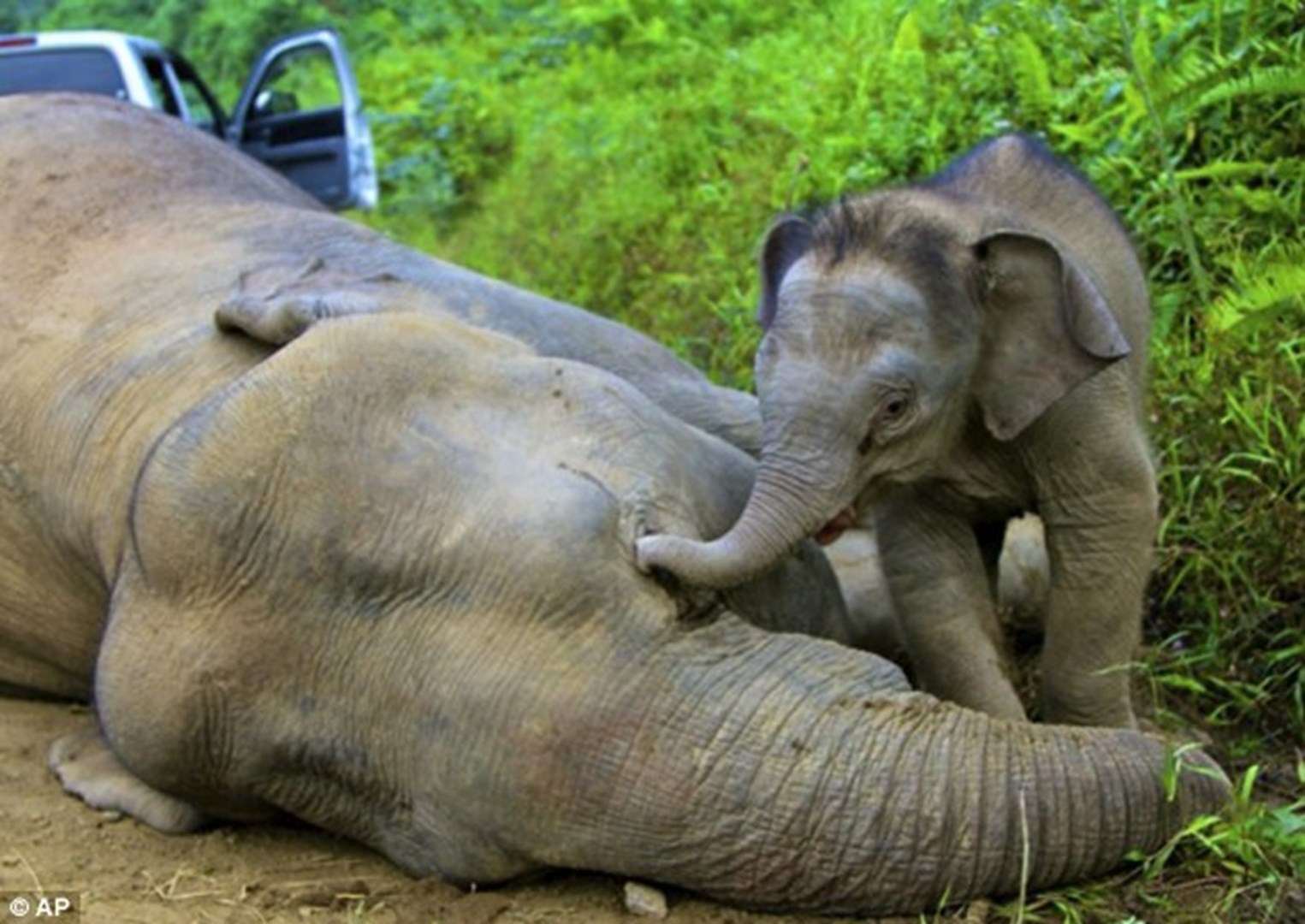
This week saw the discovery, by David Denison 973-eht-namuh-973.com site founder, concept creator and content architect, and myself of a little known, well to us, essay by that incomparable British author George Orwell: 1984, Animal Farm, The Road to Wigan Pier, Homage to Catalonia, Down and Out in Paris and London, Burmese Days…. need I go on, entitled "Shooting an Elephant" first published in the literary magazine New Writing in late 1936.

The essay deals with his experience as a police-officer in Burma. Having completed his education, Orwell joined the Indian Imperial Police, and served in Burma, from 1922 to 1927, as an Assistant Superintendent of Police with zero experience. It was to be a bad period of his life, inadequate in terms of the assignment and five years spent friendless and expected to fail.

Orwell’s vivid recollection of an incident in which he perpetrates the murder of an elephant some years earlier, and his deep regret over choice to kill stand out sharply in the essay.

The elephant goes `must' in a bazaar and kills a man. An Englishman in a senior position in the British Empire was always expected to rise to an occasion like this. With little choice given the zeitgeist Orwell takes a rifle and marches down to the field where the elephant has retreated.

At first sight, he immediately knows that it is unnecessary to kill the animal; now becalmed; its fit of enraged madness over. Yet he is equally sure, that he is going to have to shoot it. The crowd following him dislike their British masters intensely in the main, but are willing him to kill what they see as a dumb beast that has killed one of their own, while under Orwell’s protection as a policeman.

Incidents like this changed his life not just in his pursuit of socialism, but his firm refusal to hunt and kill animals.
We can only hope that eventually, raw guilt will lay itself like a similar blanket on the heads of those ivory poachers for whom the slaughter of these magnificent creatures is a way of life and remain undeterred by any form of law & order in search of another killing for obscene profits on tusks. Hopefully an equal measure of that same guilt will weigh on the the mental condition of the buyers so heavily that their demand turns to witchdoctor dust, for they are as cursed as the killers.

http://www.theshortstory.co.uk/wp-conte ... ephant.pdf

Image

Re: All Creatures Great and Small

Posted: 24 Apr 2018 23:46
by hope
The Peregrine Falcon

The Peregrine Falcon is a raptor, or bird of prey. Adults have blue-gray wings, dark brown backs, a buff coloured
underside with brown spots, and white faces with a black tear stripe on their cheeks. They have hooked beaks
and strong talons. Their name comes from the Latin word "peregrinus", which means "to wander". They are commonly
referred to as the Duck Hawk. Peregrine falcons are the fastest-flying birds in the world- they are able to dive at
200 miles an hour.


image.jpeg


Peregrine falcons eat other birds such as songbirds and ducks, as well as bats, they catch their prey in mid-air.
There are an estimated 1,650 breeding pairs in the United States and Canada.
This bird is one of the most widely distributed species in the world. It is found on every continent except Antarctica.
It can survive in a wide variety of habitats including urban cities, the tropics, deserts and the tundra. Some migrate
long distances from their wintering areas to their summer nesting areas.

Peregrine falcons have adapted to living in many cities and make use of tall buildings that provide suitable ledges
for nesting and depend on the large populations of pigeons and starlings in cities for food. They dive and catch their
prey in mid-air. Peregrines have few natural predators.

Peregrine falcons mate for life and breed in the same territory each year. The male courts the female for about one
month, using aerial displays. They make a nest, or scrape,ledges and in small caves located on a cliff.

Both male and female incubate the eggs for about one month. The chicks start to fly in about 42 days, but are still
dependent on their parents to learn how to hunt. Peregrine falcons are very territorial during breeding season and
will vigorously defend their nests.

Length: 15-21 inches (wing span 3.5 feet).
Weight: About 2lbs; females are slightly larger than males.
Lifespan: 7-15 years, some can live as long as 20years.

Re: All Creatures Great and Small

Posted: 11 May 2018 03:05
by hope
RED APE:SAVING THE ORANGUTAN

Today,Thur 10th May 2018 9pm-10pm BBC 2

It will be hard to watch this documentary about orangutans in Borneo without getting angry and dispirited. In fact,
it's hard to watch, full stop.

The scenes of orangutans- such handsome, relatable apes - chained up by wildlife traffickers or clinging to the
very last tree in the area flattened by loggers are distressing. But by way of contrast we follow the determined
efforts of a charity to rescue and relocate them to areas of virgin forest - some of which remain despite a football - field's worth being destroyed, we are told, every 47 seconds.

Vast plantations of oil palm trees are the main problem. But from cosmetics to foodstuff, palm oil is everywhere
and weaning ourselves of it - or ensuring it's farmed sustainably - won't be easy. Is is, as one conservationists here
says, a story of "human domination over nature".

For the last decade, a team of frontline medics has been fighting to save Borneo's critically endangered orangutans.
Armed with cameras, the members of International Animal Rescue have documented their struggle as they pull
apes from devastated jungles, give emergency medical care, rehabilitate and release the healthiest orangutans
back into the wild. This documentary tells both the story of their work and how the orangutan - one of man's closet
wild relatives - has been pushed to the brink of extinction.

image.png

ORANGUTAN
6-9-1-5-7-3--2-1-5
12
3


How many orangutans exist now.
"Both species have experienced sharp population declines. A century ago there were probably more than 230,000 orangutans in total, but the Birnean orangutan is now estimated is now at about
104,700 based on updated geographic range (Endangered) and the Sumatran about 7,500 (Critically Endangered)."

How many orangutans are killed every day?
"Hundreds of infant oar are taken from the wild for the pet trade every year. This is done by killing the mother
and taking the baby. It is estimated that four to five orangutans die for every baby reaching the market."


http://www.radiotimes.com/tv-programme/ ... orangutan/

Re: All Creatures Great and Small

Posted: 11 Jun 2018 18:15
by hope
MAGPIE and its visitation

Magpies are often maligned as pests, but actually they're quite Intersting birds that are usually overlooked for
both their beauty and their intelligence.
Magpies have a reputation as thieves out to steal your whiny jewellery or take ornaments from your garden, but
new research shows that flashy objects, probably repeal magpies. The myth seems to have been built up without
much science to back it up, but the truth could actually be useful.

Magpies are capable of wrecking crops by digging for grain, berries and other food, so along with other bird-scaring
measures, placing shiny materials in field might deter magpies and keep crops safe from being upturned and
trampled.

While their natural diet is quite broad - including insects, small rodents, grain and berries - magpies have been
know to steal other bird's eggs and even young chicks. In addition, magpies have adapted rather well to suburban living, so they'll often eat leftover food scares

Though magpies may look quite a bit different at first glance,they belong to the bird family Corvidae, a group that
include crows, Ravens, rooks and jays, as well as lesser recognised members like treepies, cloughs and nutcrackers.
As such, magpies are among the most intelligent family of birds recognised by modern science.
European magpies have demonstrate the remarkable ability to recognise their own reflections in mirrors, something that was once thought to be a defining characteristic belonging only to humans.

A final fascinating fact relates to one of the defining features of a magpie , while they share some similarities with their corvid family, the magpie possess an extremely long tail. In fact a magpie's rail often roughly the same
length as its entire body.


The Visitation
What a surprise for David Denison who had a little visitor, David heard a chirping noise coming from his chimney,
with the help of a friend, they managed to set the magikal creative from its captivity back to its life within the
tree in his garden.

David took a picture of the baby magpie..


image.jpeg

MAGPIE
4-1-7-7-9-5
33
6

"The second element, pie, derives from Latin Pica, itself meaning ' magpie'... It is possible that picus also
gave us the other pie, as in the baked pastry dish, perhaps alluding to the magpie's habit of collecting random
objects in comparison to a pie's various ingredients."

Well magic is as magic does... David had a 2nd visitation from a magpie,.

So it's 1 for sorrow....now 2 for Joy.

Re: All Creatures Great and Small

Posted: 22 Jun 2018 20:22
by hope
NOTORIOUS ARACHNID

Sighting of the false widow spider in the Uk are on the up, with concern growing about how widespread the creepy crawlies really are.

The species has a fearsome reputation as one of the few British breeds capable of inflicting a painful bite to humans-
but is there really anything to be afraid of ? We've got the lowdown on them...

image.jpeg


The false widow spider's bite is no more than a bee or wasp sting, experts have said.
Steatoda Nobilis - commonly known as the false widow spider - is native to Maderia and the Canary Islands, and is
believed to have arrived on British shores via a cargo transporter before 1879.

It is thought to have thrived in the UK in recent years due to milder winters.
Recently, reports revealed that the eight-legged beasties had began making their way into British homes as temperatures have dropped.

This spider is a nocturnal and will normally spend the day sleeping inside a crack or hole close to its web.
False widows like dry, warm environments where they will be unlikely to be disturbed.
This is often what brings them into people's homes.

The spiders are most commonly seen in the south of the country, but reported sightings suggest it's moving
northwards.

How can you spot a false widow spider?
The false widow is a medium sized spider with a round, brown body and cream coloured markings.
It's legs are a reddish-orange colour.
Females range in size from 9.5 to 14mm while the males are 7 to 11mm.
The spider's body and legs will have a glossy appearance.
The species closely resemble the black widow spider, aside from its colouring.

Is the false widow's bite venomous?
Like most spiders, the false widow's bite is venomous, but it almost always only has a mild effect on humans.
Most bites result in symptoms similar to a be or wasp sting.
Experts say the species are not normally aggressive towards humans and bites are rare, but if the spiders are
caught in clothing, prodded or squashed they may attack.

The female bites are more severe than the males and typically result in intense pain radiating from the bite,
along with fever.

Has anyone died from the false widow spider's bite?
There has been reported deaths in the Uk resulting from false widow spider bites,
but, there have been a number of alleged incidents where people have had "severe reactions and required hospital
treatment".
A student was recently left with a "one-inch hole in his leg after bitten by a false widow in his sleep.
A 46-year old man lost his leg and suffered kidney failure after a false widow bit him on the ankle as he worked outside.

If you are bitten by the spider the first thing to do is wash the area in soap and water.

A bite spray or antiseptic cream will also help to prevent infection.

Well that makes you feel a bit safer, doesn't it?

https://www.livescience.com/39919-black ... iders.html

Re: All Creatures Great and Small

Posted: 25 Jun 2018 23:15
by hope
BOLAS SPIDER
Bolas spiders (members of the genus Mastophora, in North America) are famous for their unusual prey capture
technique: rather than a web, they produce a single silk line with a super-sticky ball of glue at the end, which
they fling at their prey.


image.jpeg


The common name 'bolas spider' is not particularly accurate though. A real bolas - two or more weights connected
by cord - is swung and thrown at an animal ( like a horse, in the image below) in its entirety, and works by getting
tangled around the legs of the target.

The spider's 'bolas' differs in that it never leaves its owner's grip, and works by getting stuck to the target, which
invariably a moth. Eberhand (1980) observed that a more appropriate name would be " sticky yo-yo spiders".
These spiders are masters of deception, both olfactory and visual.


Amazing creature that does the same as hunters when mounted on a horse.

A hunter using 'bolas' while mounted on a horse. A bolas (plural : bolas or bolases; from the Spanish bola, "ball",
also known as boleadoras) is a type of throwing weapon made of weights on the ends of interconnected cords,
used to capture animals by entangling their legs."

Re: All Creatures Great and Small

Posted: 25 Jun 2018 23:16
by hope
image.jpeg