Poem Corner

Click 'The Oracle' title above to enter The Oracle Forum and discuss your quest for answers with kindred spirits. Courtesy costs nothing - if you disagree with someone, disagree politely. Abuse is not tolerated.
Redbeck
Site Admin
Posts: 2144
Joined: 19 Dec 2010 15:42
Location: The Rookery, 3rd Horse Chestnut along, St Johns, Britain. Teacher leave our nuts alone!
Contact:

Re: Poem Corner

Post by Redbeck »

Love Is A Parallax - Sylvia Plath

'Perspective betrays with its dichotomy:
train tracks always meet, not here, but only
in the impossible mind's eye;
horizons beat a retreat as we embark
on sophist seas to overtake that mark
where wave pretends to drench real sky.'

'Well then, if we agree, it is not odd
that one man's devil is another's god
or that the solar spectrum is
a multitude of shaded grays; suspense
on the quicksands of ambivalence
is our life's whole nemesis.

So we could rave on, darling, you and I,
until the stars tick out a lullaby
about each cosmic pro and con;
nothing changes, for all the blazing of
our drastic jargon, but clock hands that move
implacably from twelve to one.

We raise our arguments like sitting ducks
to knock them down with logic or with luck
and contradict ourselves for fun;
the waitress holds our coats and we put on
the raw wind like a scarf; love is a faun
who insists his playmates run.

Now you, my intellectual leprechaun,
would have me swallow the entire sun
like an enormous oyster, down
the ocean in one gulp: you say a mark
of comet hara-kiri through the dark
should inflame the sleeping town.

So kiss: the drunks upon the curb and dames
in dubious doorways forget their monday names,
caper with candles in their heads;
the leaves applaud, and santa claus flies in
scattering candy from a zeppelin,
playing his prodigal charades.

The moon leans down to took; the tilting fish
in the rare river wink and laugh; we lavish
blessings right and left and cry
hello, and then hello again in deaf
churchyard ears until the starlit stiff
graves all carol in reply.

Now kiss again: till our strict father leans
to call for curtain on our thousand scenes;
brazen actors mock at him,
multiply pink harlequins and sing
in gay ventriloquy from wing to wing
while footlights flare and houselights dim.

Tell now, we taunt where black or white begins
and separate the flutes from violins:
the algebra of absolutes
explodes in a kaleidoscope of shapes
that jar, while each polemic jackanapes
joins his enemies' recruits.

The paradox is that 'the play's the thing':
though prima donna pouts and critic stings,
there burns throughout the line of words,
the cultivated act, a fierce brief fusion
which dreamers call real, and realists, illusion:
an insight like the flight of birds:

Arrows that lacerate the sky, while knowing
the secret of their ecstasy's in going;
some day, moving, one will drop,
and, dropping, die, to trace a wound that heals
only to reopen as flesh congeals:
cycling phoenix never stops.

So we shall walk barefoot on walnut shells
of withered worlds, and stamp out puny hells
and heavens till the spirits squeak
surrender: to build our bed as high as jack's
bold beanstalk; lie and love till sharp scythe hacks
away our rationed days and weeks.

Then jet the blue tent topple, stars rain down,
and god or void appall us till we drown
in our own tears: today we start
to pay the piper with each breath, yet love
knows not of death nor calculus above
the simple sum of heart plus heart.

Image

Image
Sylvia Plath
User avatar
Koguntetsu
Posts: 172
Joined: 11 Feb 2018 11:19
Contact:

Re: Poem Corner

Post by Koguntetsu »

One of my favorite poems is called the destruction of sennacherib. The pace of the poem is meant to sound like the running of horses.

The Destruction of Sennacherib

The Assyrian came down like the wolf on the fold,
And his cohorts were gleaming in purple and gold;
And the sheen of their spears was like stars on the sea,
When the blue wave rolls nightly on deep Galilee.

Like the leaves of the forest when Summer is green,
That host with their banners at sunset were seen:
Like the leaves of the forest when Autumn hath blown,
That host on the morrow lay withered and strown.

For the Angel of Death spread his wings on the blast,
And breathed in the face of the foe as he passed;
And the eyes of the sleepers waxed deadly and chill,
And their hearts but once heaved, and for ever grew still!

And there lay the steed with his nostril all wide,
But through it there rolled not the breath of his pride;
And the foam of his gasping lay white on the turf,
And cold as the spray of the rock-beating surf.

And there lay the rider distorted and pale,
With the dew on his brow, and the rust on his mail:
And the tents were all silent, the banners alone,
The lances unlifted, the trumpet unblown.

And the widows of Ashur are loud in their wail,
And the idols are broke in the temple of Baal;
And the might of the Gentile, unsmote by the sword,
Hath melted like snow in the glance of the Lord.

—George (Noel) Gordon Byron (AKA, Lord Byron)
Redbeck
Site Admin
Posts: 2144
Joined: 19 Dec 2010 15:42
Location: The Rookery, 3rd Horse Chestnut along, St Johns, Britain. Teacher leave our nuts alone!
Contact:

Re: Poem Corner

Post by Redbeck »

Koguntetsu, splendid submission, thank you for that, Lord Byron was a remarkable creative being who turned a fine stanza. Redbeck

The Oven Bird
BY ROBERT FROST 1916

There is a singer everyone has heard,
Loud, a mid-summer and a mid-wood bird,
Who makes the solid tree trunks sound again.
He says that leaves are old and that for flowers
Mid-summer is to spring as one to ten.
He says the early petal-fall is past
When pear and cherry bloom went down in showers
On sunny days a moment overcast;
And comes that other fall we name the fall.
He says the highway dust is over all.
The bird would cease and be as other birds
But that he knows in singing not to sing.
The question that he frames in all but words
Is what to make of a diminished thing.

and an interpretation of Robert Frost's The Oven Bird......

The Oven Bird is an unusual sonnet employing a stretched metaphor, whereby a bird, the Oven
Bird, assumes the poet’s role, and vice versa. The bird’s song becomes the work of the poet, sculpting language into relevant forms, creating tailored sound thus altering the relationship with nature.

So how come Robert Frost chose this specific common North American bird to represent himself as a middle aged poet? One thought is that the male bird's simple, repetitive song, often described as 'teacher, teacher, teacher', reminded him of what poetry should not be loud, tediously lacking in fluctuation and undisguised? Yes indeed therein lies the paradox.

Image
Redbeck
Site Admin
Posts: 2144
Joined: 19 Dec 2010 15:42
Location: The Rookery, 3rd Horse Chestnut along, St Johns, Britain. Teacher leave our nuts alone!
Contact:

Re: Poem Corner

Post by Redbeck »

Once Upon A Time In Paris

Rain will fall again
on your smooth pavement,
a light rain like a
breath or a step.
The breeze and the dawn
will flourish again
when you return,
as if beneath your step.
Between flowers and sills
the cats will know.

Estoy Perdida

Image
Redbeck
Site Admin
Posts: 2144
Joined: 19 Dec 2010 15:42
Location: The Rookery, 3rd Horse Chestnut along, St Johns, Britain. Teacher leave our nuts alone!
Contact:

Re: Poem Corner

Post by Redbeck »

Well I have just quoted the Dimension [I'm Denison) a couple of the of the best-known lines in English literature English literature, notably “Full many a flower is born to blush unseen” and “Far from the madding Crowd’s ignoble Strife.” in a text message. Extracted from An Elegy Written in a Country Church Yard by Thomas Gray, which is one of the best-known elegies in the English language. It is best described as a meditation on unfulfilled human potential, the prevailing conditions of English rural life in the 1740s and 50s [exhibiting the gentle melancholy characteristic of the English poets who formed what was known as the graveyard school in that period], and mortality. It struck me as I wrote these lines in a text message to DD that the thread Poem Corner had stood unattended for far too long.

The elegy begins while the narrator stands musing in a graveyard at close of day; he reflects on the probably obscure lives led by the villagers who lie buried beneath his feet and suggests that they may have been full of rich promise that was ultimately thwarted and restricted by poverty or ignorance. The churchyard in the poem is believed to be located in Stoke Poges, Buckinghamshire, a place frequently visited by Gray and in fact where he now lies buried.


Image

Elegy Written in a Country Churchyard
BY THOMAS GRAY

The curfew tolls the knell of parting day,
The lowing herd wind slowly o'er the lea,
The plowman homeward plods his weary way,
And leaves the world to darkness and to me.

Now fades the glimm'ring landscape on the sight,
And all the air a solemn stillness holds,
Save where the beetle wheels his droning flight,
And drowsy tinklings lull the distant folds;

Save that from yonder ivy-mantled tow'r
The moping owl does to the moon complain
Of such, as wand'ring near her secret bow'r,
Molest her ancient solitary reign.

Beneath those rugged elms, that yew-tree's shade,
Where heaves the turf in many a mould'ring heap,
Each in his narrow cell for ever laid,
The rude forefathers of the hamlet sleep.

The breezy call of incense-breathing Morn,
The swallow twitt'ring from the straw-built shed,
The cock's shrill clarion, or the echoing horn,
No more shall rouse them from their lowly bed.

For them no more the blazing hearth shall burn,
Or busy housewife ply her evening care:
No children run to lisp their sire's return,
Or climb his knees the envied kiss to share.

Oft did the harvest to their sickle yield,
Their furrow oft the stubborn glebe has broke;
How jocund did they drive their team afield!
How bow'd the woods beneath their sturdy stroke!

Let not Ambition mock their useful toil,
Their homely joys, and destiny obscure;
Nor Grandeur hear with a disdainful smile
The short and simple annals of the poor.

The boast of heraldry, the pomp of pow'r,
And all that beauty, all that wealth e'er gave,
Awaits alike th' inevitable hour.
The paths of glory lead but to the grave.

Nor you, ye proud, impute to these the fault,
If Mem'ry o'er their tomb no trophies raise,
Where thro' the long-drawn aisle and fretted vault
The pealing anthem swells the note of praise.

Can storied urn or animated bust
Back to its mansion call the fleeting breath?
Can Honour's voice provoke the silent dust,
Or Flatt'ry soothe the dull cold ear of Death?

Perhaps in this neglected spot is laid
Some heart once pregnant with celestial fire;
Hands, that the rod of empire might have sway'd,
Or wak'd to ecstasy the living lyre.

But Knowledge to their eyes her ample page
Rich with the spoils of time did ne'er unroll;
Chill Penury repress'd their noble rage,
And froze the genial current of the soul.

Full many a gem of purest ray serene,
The dark unfathom'd caves of ocean bear:
Full many a flow'r is born to blush unseen,
And waste its sweetness on the desert air.

Some village-Hampden, that with dauntless breast
The little tyrant of his fields withstood;
Some mute inglorious Milton here may rest,
Some Cromwell guiltless of his country's blood.

Th' applause of list'ning senates to command,
The threats of pain and ruin to despise,
To scatter plenty o'er a smiling land,
And read their hist'ry in a nation's eyes,

Their lot forbade: nor circumscrib'd alone
Their growing virtues, but their crimes confin'd;
Forbade to wade through slaughter to a throne,
And shut the gates of mercy on mankind,

The struggling pangs of conscious truth to hide,
To quench the blushes of ingenuous shame,
Or heap the shrine of Luxury and Pride
With incense kindled at the Muse's flame.

Far from the madding crowd's ignoble strife,
Their sober wishes never learn'd to stray;
Along the cool sequester'd vale of life
They kept the noiseless tenor of their way.

Yet ev'n these bones from insult to protect,
Some frail memorial still erected nigh,
With uncouth rhymes and shapeless sculpture deck'd,
Implores the passing tribute of a sigh.

Their name, their years, spelt by th' unletter'd muse,
The place of fame and elegy supply:
And many a holy text around she strews,
That teach the rustic moralist to die.

For who to dumb Forgetfulness a prey,
This pleasing anxious being e'er resign'd,
Left the warm precincts of the cheerful day,
Nor cast one longing, ling'ring look behind?

On some fond breast the parting soul relies,
Some pious drops the closing eye requires;
Ev'n from the tomb the voice of Nature cries,
Ev'n in our ashes live their wonted fires.

For thee, who mindful of th' unhonour'd Dead
Dost in these lines their artless tale relate;
If chance, by lonely contemplation led,
Some kindred spirit shall inquire thy fate,

Haply some hoary-headed swain may say,
"Oft have we seen him at the peep of dawn
Brushing with hasty steps the dews away
To meet the sun upon the upland lawn.

"There at the foot of yonder nodding beech
That wreathes its old fantastic roots so high,
His listless length at noontide would he stretch,
And pore upon the brook that babbles by.

"Hard by yon wood, now smiling as in scorn,
Mutt'ring his wayward fancies he would rove,
Now drooping, woeful wan, like one forlorn,
Or craz'd with care, or cross'd in hopeless love.

"One morn I miss'd him on the custom'd hill,
Along the heath and near his fav'rite tree;
Another came; nor yet beside the rill,
Nor up the lawn, nor at the wood was he;

"The next with dirges due in sad array
Slow thro' the church-way path we saw him borne.
Approach and read (for thou canst read) the lay,
Grav'd on the stone beneath yon aged thorn."

THE EPITAPH
Here rests his head upon the lap of Earth
A youth to Fortune and to Fame unknown.
Fair Science frown'd not on his humble birth,
And Melancholy mark'd him for her own.

Large was his bounty, and his soul sincere,
Heav'n did a recompense as largely send:
He gave to Mis'ry all he had, a tear,
He gain'd from Heav'n ('twas all he wish'd) a friend.

No farther seek his merits to disclose,
Or draw his frailties from their dread abode,
(There they alike in trembling hope repose)
The bosom of his Father and his God.

Nazheek
Posts: 424
Joined: 30 Nov 2015 18:26
Location: US Southeast
Contact:

Re: Poem Corner

Post by Nazheek »

Maxim for Men, Havamal, Codex Regius, Second Poem
80.
Praise day at even, a wife when dead,
a weapon when tried, a maid when married,
ice when 'tis crossed, and ale when 'tis drunk.
81.
Hew wood in wind, sail the seas in a breeze,
woo a maid in the dark, -- for day's eyes are many, --
work a ship for its gliding, a shield for its shelter,
a sword for its striking, a maid for her kiss;

82.
Drink ale by the fire, but slide on the ice;
buy a steed when 'tis lanky, a sword when 'tis rusty;
feed thy horse neath a roof, and thy hound in the yard.

83.
The speech of a maiden should no man trust
nor the words which a woman says;
for their hearts were shaped on a whirling wheel
and falsehood fixed in their breasts.

84.
Breaking bow, or flaring flame,
ravening wolf, or croaking raven,
routing swine, or rootless tree,
waxing wave, or seething cauldron,

85.
flying arrows, or falling billow,
ice of a nighttime, coiling adder,
woman's bed-talk, or broken blade,
play of bears or a prince's child,

86.
sickly calf or self-willed thrall,
witch's flattery, new-slain foe,
brother's slayer, though seen on the highway,
half burned house, or horse too swift --
be never so trustful as these to trust.

87.
Let none put faith in the first sown fruit
nor yet in his son too soon;
whim rules the child, and weather the field,
each is open to chance.

88.
Like the love of women whose thoughts are lies
is the driving un-roughshod o'er slippery ice
of a two year old, ill-tamed and gay;
or in a wild wind steering a helmless ship,
or the lame catching reindeer in the rime-thawed fell.
Feel free to send me a PM or an email. Expect faster responses by email.
Redbeck
Site Admin
Posts: 2144
Joined: 19 Dec 2010 15:42
Location: The Rookery, 3rd Horse Chestnut along, St Johns, Britain. Teacher leave our nuts alone!
Contact:

Re: Poem Corner

Post by Redbeck »

Nazheek, some other extracts from the same:

Image

"Odin's Self-sacrifice" (1908) by W. G. Collingwood

Cattle die,
kinsmen die
you yourself die;
One thing now
that never dies
the fame of a dead man’s deeds
I know that I hung on a windy tree
nine long nights,
wounded with a spear, dedicated to Odin,
myself to myself,
on that tree of which no man knows from where its roots run.

No bread did they give me nor a drink from a horn,
downwards I peered;
I took up the runes,
screaming I took them,
then I fell back from there.
The songs I know
that king's wives know not
Nor men that are sons of men
So do I write
and colour the runes

Image

The younger Jelling stone (erected by Harald Bluetooth 970 AD) shows the crucifixion of Christ with the victim suspended in the branches of a tree instead of on a cross.
User avatar
H4RV5P3X
Posts: 11
Joined: 12 Oct 2018 01:07
Location: New York City
Contact:

Re: Poem Corner

Post by H4RV5P3X »

<://

I want to go with the one I love by Bertolt Brecht

I want to go with the one I love.
I do not want to calculate the cost.
I do not want to think about whether it's good.
I do not want to know whether he loves me.
I want to go with whom I love.

--

Promethea, between you and me,
I’m doing my best to meet the dark.
In a pitch black room, do you open your eyes and see
Or are you, like me, shaken by the quiet stark?

The solitude of empty spaces encases
and distills the substance of the soul.
A thousand and one beautiful shifting flawed faces
flicker past in an array so fast, becoming and seeming whole.

Promethea, am I as strong as you?
Can I be brave and honest and wise and true?
Under the dust and cobwebs (somewhere
in that misty dark) I know the answer.


--

The Wolf God by Anne Carson

Like a painting we will be erased, no one can remain.
I saw my life as a wolf loping along the road
And I questioned the women of that place.

Some regard the wolf as immortal, they said.
Now you know this only happened in one case and that
Wolves die regularly of various causes—

Bears kill them, tigers hunt them,
They get epilepsy,
They get a salmon bone crosswise in their throat,

They run themselves to death no one knows why—
But perhaps you never heard
Of their ear trouble.

They have very good ears,
Can hear a cloud pass overhead.
And sometimes it happens

That a windblown seed will bury itself in the aural canal
Displacing equilibrium.
They go mad trying to stand upright,

Nothing to link with.
Die of anger.
Only one we know learned to go along with it.

He took small steps at first.
Using the updrafts.
They call him Huizkol,

That means
Looks Good in Spring.
Things are as hard as you make them.

--

That shadow! Laced up and forged
deep within; ---- Unsurfac'd gorge delighting
in its privacy, refining His Majesty, and relighting
the fires of the soul from void-black coal.
Darkly startling hearts yards to miles uncorruptedly
uncompromising apologies to the chef for being so
picky but I do not like a lack of honest presence and
in fact I do not like a lack at all!


--

The Crystal Gazer by Sara Teasdale

I shall gather myself into myself again,
I shall take my scattered selves and make them one,
Fusing them into a polished crystal ball
Where I can see the moon and the flashing sun.

I shall sit like a sibyl, hour after hour intent,
Watching the future come and the present go,
And the little shifting pictures of people rushing
In restless self-importance to and fro.

--

It's not a blanket or a gun;
it won't set you at ease.
Without them it's not true fun
to sail all seven stormy seas.

We all crave witness. | Love, a fickle mistress
reality not enough | her cold shoulder, rough.


--
The Solitary by Sara Teasdale

My heart has grown rich with the passing of years,
I have less need now than when I was young
To share myself with every comer
Or shape my thoughts into words with my tongue.

It is one to me that they come or go
If I have myself and the drive of my will,
And strength to climb on a summer night
And watch the stars swarm over the hill.

Let them think I love them more than I do,
Let them think I care, though I go alone;
If it lifts their pride, what is it to me
Who am self-complete as a flower or a stone. >
User avatar
Koguntetsu
Posts: 172
Joined: 11 Feb 2018 11:19
Contact:

Re: Poem Corner

Post by Koguntetsu »

The Sickness

Walking down the road, i begin feeling faint.
Heat exaustion, or something more?
Shrugging it off, but down in my core,
I somehow know that i have caught the taint.

Another day passes and still i feel okay,
Was that a cough or a hack?
Or maybe a bit more pain in my back?
Ignorance for now as i go about my day.

I go to my room and head off to bed,
feeling my brow, the incredible heat,
I feel it's too late, i've met my defeat.
Next morn i awake rising like the dead.

Crash! Snap! I fall to the floor.
My muscles seem tangled,
The bones feeling mangled,
I scream out loud "Please god no more."

Struggling to stand, i get up on my feet,
I walk to my chair, in hopes of some rest,
But my bones still struggle, my muscles contest.
I hunger and sigh, knowing i'm too sick to eat.

Invisible daggers stab at my spine,
And Thror's hammer was smashing my thigh.
I whimper and stretch and soon start to cry.
The smells make me nauseous, from food that's not mine.

Exhaustion, Darkness, fading to black.
Before i pass out i crawl back to bed,
And lay on my back to rest my head.
Eventually consciousness brings me back.

For four days and nights, i fade between sleep.
The pain continues and keeps me awake,
Nagging "Go see the doctor for goodness sake."
But i can't hardly move, i can barely even creep.

On the fifth day i arise, stomach starts to ache.
Five days without food, well of course that's why,
Your stomach feels like it's going to die.
I go to the kitchen and begin to bake.

I notice, to much surprise my pain seems small,
Normal for a back such as mine.
I set down my meal and finally dine.
With soliosis there's always pain, after all!

And so is why i write this today,
In the hopes you never feel this way.

-Koguntetsu
adamant
Posts: 1
Joined: 02 Nov 2018 05:08
Contact:

Re: Poem Corner

Post by adamant »

Nice poem guys. Keep it up.
Redbeck
Site Admin
Posts: 2144
Joined: 19 Dec 2010 15:42
Location: The Rookery, 3rd Horse Chestnut along, St Johns, Britain. Teacher leave our nuts alone!
Contact:

Re: Poem Corner

Post by Redbeck »

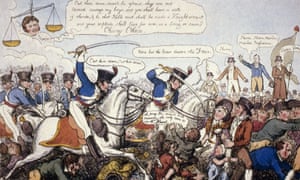
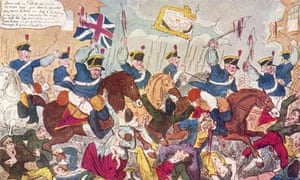
The Masque of Anarchy

by Percy Shelley, 1819, following the Peterloo Massacre, publication of the poem was suppressed
by the censorship of British authorities for 30 years.
He also wrote about Britain's rulers in the same year.
Image

As I lay asleep in Italy
There came a voice from over the Sea,
And with great power it forth led me
To walk in the visions of Poesy.

I met Murder on the way—
He had a mask like Castlereagh—
Very smooth he looked, yet grim ;
Seven blood-hounds followed him :

All were fat ; and well they might
Be in admirable plight,
For one by one, and two by two,
He tossed them human hearts to chew
Which from his wide cloak he drew.

Next came Fraud, and he had on,
Like Lord Eldon, an ermined gown ;
His big tears, for he wept well,
Turned to mill-stones as they fell.

And the little children, who
Round his feet played to and fro,
Thinking every tear a gem,
Had their brains knocked out by them.

Clothed with the Bible, as with light,
And the shadows of the night,
Like Sidmouth, next, Hypocrisy
On a crocodile rode by.

And many more Destructions played
In this ghastly masquerade,
All disguised, even to the eyes,
Like Bishops, lawyers, peers, and spies.

Last came Anarchy : he rode
On a white horse, splashed with blood ;
He was pale even to the lips,
Like Death in the Apocalypse.

And he wore a kingly crown ;
And in his grasp a sceptre shone ;
On his brow this mark I saw—
‘I AM GOD, AND KING, AND LAW!’

With a pace stately and fast,
Over English land he passed,
Trampling to a mire of blood
The adoring multitude.

And with a mighty troop around
With their trampling shook the ground,
Waving each a bloody sword,
For the service of their Lord.

And with glorious triumph they
Rode through England proud and gay,
Drunk as with intoxication
Of the wine of desolation.

O’er fields and towns, from sea to sea,
Passed the Pageant swift and free,
Tearing up, and trampling down ;
Till they came to London town.

And each dweller, panic-stricken,
Felt his heart with terror sicken
Hearing the tempestuous cry
Of the triumph of Anarchy.

For from pomp to meet him came,
Clothed in arms like blood and flame,
The hired murderers, who did sing
‘Thou art God, and Law, and King.

‘We have waited weak and lone
For thy coming, Mighty One!
Our purses are empty, our swords are cold,
Give us glory, and blood, and gold.’

Lawyers and priests a motley crowd,
To the earth their pale brows bowed ;
Like a bad prayer not over loud,
Whispering—‘Thou art Law and God.’—

Then all cried with one accord,
‘Thou art King, and God, and Lord ;
Anarchy, to thee we bow,
Be thy name made holy now!’

And Anarchy, the Skeleton,
Bowed and grinned to every one,
As well as if his education
Had cost ten millions to the nation.

For he knew the Palaces
Of our Kings were rightly his ;
His the sceptre, crown, and globe,
And the gold-inwoven robe.
Image


So he sent his slaves before
To seize upon the Bank and Tower,
And was proceeding with intent
To meet his pensioned Parliament

When one fled past, a maniac maid,
And her name was Hope, she said :
But she looked more like Despair,
And she cried out in the air :

‘My father Time is weak and gray
With waiting for a better day ;
See how idiot-like he stands,
Fumbling with his palsied hands!

‘He has had child after child,
And the dust of death is piled
Over every one but me—
Misery, oh, Misery!’

Then she lay down in the street,
Right before the horses feet,
Expecting, with a patient eye,
Murder, Fraud, and Anarchy.

When between her and her foes
A mist, a light, an image rose.
Small at first, and weak, and frail
Like the vapour of a vale :

Till as clouds grow on the blast,
Like tower-crowned giants striding fast,
And glare with lightnings as they fly,
And speak in thunder to the sky.

It grew—a Shape arrayed in mail
Brighter than the viper’s scale,
And upborne on wings whose grain
Was as the light of sunny rain.

On its helm, seen far away,
A planet, like the Morning’s, lay ;
And those plumes its light rained through
Like a shower of crimson dew.

With step as soft as wind it passed
O’er the heads of men—so fast
That they knew the presence there,
And looked,—but all was empty air.

As flowers beneath May’s footstep waken,
As stars from Night’s loose hair are shaken,
As waves arise when loud winds call,
Thoughts sprung where’er that step did fall.

And the prostrate multitude
Looked—and ankle-deep in blood,
Hope, that maiden most serene,
Was walking with a quiet mien :

And Anarchy, the ghastly birth,
Lay dead earth upon the earth ;
The Horse of Death tameless as wind
Fled, and with his hoofs did grind
To dust the murderers thronged behind.

Image


A rushing light of clouds and splendour,
A sense awakening and yet tender
Was heard and felt—and at its close
These words of joy and fear arose

As if their own indignant Earth
Which gave the sons of England birth
Had felt their blood upon her brow,
And shuddering with a mother’s throe

Had turned every drop of blood
By which her face had been bedewed
To an accent unwithstood,—
As if her heart cried out aloud :

‘Men of England, heirs of Glory,
Heroes of unwritten story,
Nurslings of one mighty Mother,
Hopes of her, and one another ;

‘Rise like Lions after slumber
In unvanquishable number.
Shake your chains to earth like dew
Which in sleep had fallen on you—
Ye are many—they are few.

‘What is Freedom?—ye can tell
That which slavery is, too well—
For its very name has grown
To an echo of your own.

‘’Tis to work and have such pay
As just keeps life from day to day
In your limbs, as in a cell
For the tyrants’ use to dwell,

‘So that ye for them are made
Loom, and plough, and sword, and spade,
With or without your own will bent
To their defence and nourishment.

‘’Tis to see your children weak
With their mothers pine and peak,
When the winter winds are bleak,—
They are dying whilst I speak.

‘’Tis to hunger for such diet
As the rich man in his riot
Casts to the fat dogs that lie
Surfeiting beneath his eye ;

‘’Tis to let the Ghost of Gold
Take from Toil a thousandfold
More than e’er its substance could
In the tyrannies of old.

‘Paper coin—that forgery
Of the title-deeds, which ye
Hold to something from the worth
Of the inheritance of Earth.

‘’Tis to be a slave in soul
And to hold no strong control
Over your own wills, but be
All that others make of ye.

‘And at length when ye complain
With a murmur weak and vain
’Tis to see the Tyrant’s crew
Ride over your wives and you—
Blood is on the grass like dew.

‘Then it is to feel revenge
Fiercely thirsting to exchange
Blood for blood—and wrong for wrong—
Do not thus when ye are strong.

‘Birds find rest, in narrow nest
When weary of their wingèd quest ;
Beasts find fare, in woody lair
When storm and snow are in the air.

‘Horses, oxen, have a home,
When from daily toil they come ;
Household dogs, when the wind roars,
Find a home within warm doors.’

‘Asses, swine, have litter spread
And with fitting food are fed ;
All things have a home but one—
Thou, Oh, Englishman, hast none !

‘This is Slavery—savage men,
Or wild beasts within a den
Would endure not as ye do—
But such ills they never knew.

‘What art thou, Freedom ? O ! could slaves
Answer from their living graves
This demand—tyrants would flee
Like a dream’s imagery :

‘Thou are not, as impostors say,
A shadow soon to pass away,
A superstition, and a name
Echoing from the cave of Fame.

‘For the labourer thou art bread,
And a comely table spread
From his daily labour come
In a neat and happy home.

‘Thou art clothes, and fire, and food
For the trampled multitude—
No—in countries that are free
Such starvation cannot be
As in England now we see.

‘To the rich thou art a check,
When his foot is on the neck
Of his victim, thou dost make
That he treads upon a snake.

‘Thou art Justice—ne’er for gold
May thy righteous laws be sold
As laws are in England—thou
Shield’st alike both high and low.

‘Thou art Wisdom—Freemen never
Dream that God will damn for ever
All who think those things untrue
Of which Priests make such ado.

‘Thou art Peace—never by thee
Would blood and treasure wasted be
As tyrants wasted them, when all
Leagued to quench thy flame in Gaul.

‘What if English toil and blood
Was poured forth, even as a flood ?
It availed, Oh, Liberty.
To dim, but not extinguish thee.

‘Thou art Love—the rich have kissed
Thy feet, and like him following Christ,
Give their substance to the free
And through the rough world follow thee,

‘Or turn their wealth to arms, and make
War for thy belovèd sake
On wealth, and war, and fraud—whence they
Drew the power which is their prey.

‘Science, Poetry, and Thought
Are thy lamps ; they make the lot
Of the dwellers in a cot
So serene, they curse it not.

‘Spirit, Patience, Gentleness,
All that can adorn and bless
Art thou—let deeds, not words, express
Thine exceeding loveliness.

‘Let a great Assembly be
Of the fearless and the free
On some spot of English ground
Where the plains stretch wide around.

‘Let the blue sky overhead,
The green earth on which ye tread,
All that must eternal be
Witness the solemnity.

‘From the corners uttermost
Of the bounds of English coast ;
From every hut, village, and town
Where those who live and suffer moan
For others’ misery or their own,

‘From the workhouse and the prison
Where pale as corpses newly risen,
Women, children, young and old
Groan for pain, and weep for cold—

‘From the haunts of daily life
Where is waged the daily strife
With common wants and common cares
Which sows the human heart with tares—

‘Lastly from the palaces
Where the murmur of distress
Echoes, like the distant sound
Of a wind alive around

‘Those prison halls of wealth and fashion.
Where some few feel such compassion
For those who groan, and toil, and wail
As must make their brethren pale—

‘Ye who suffer woes untold,
Or to feel, or to behold
Your lost country bought and sold
With a price of blood and gold—

‘Let a vast assembly be,
And with great solemnity
Declare with measured words that ye
Are, as God has made ye, free—

‘Be your strong and simple words
Keen to wound as sharpened swords,
And wide as targes let them be,
With their shade to cover ye.

‘Let the tyrants pour around
With a quick and startling sound,
Like the loosening of a sea,
Troops of armed emblazonry.

‘Let the charged artillery drive
Till the dead air seems alive
With the clash of clanging wheels,
And the tramp of horses’ heels.

‘Let the fixèd bayonet
Gleam with sharp desire to wet
Its bright point in English blood
Looking keen as one for food.

‘Let the horsemen’s scimitars
Wheel and flash, like sphereless stars
Thirsting to eclipse their burning
In a sea of death and mourning.

‘Stand ye calm and resolute,
Like a forest close and mute,
With folded arms and looks which are
Weapons of unvanquished war,

‘And let Panic, who outspeeds
The career of armèd steeds
Pass, a disregarded shade
Through your phalanx undismayed.

‘Let the laws of your own land,
Good or ill, between ye stand
Hand to hand, and foot to foot,
Arbiters of the dispute,

‘The old laws of England—they
Whose reverend heads with age are gray,
Children of a wiser day ;
And whose solemn voice must be
Thine own echo—Liberty !

‘On those who first should violate
Such sacred heralds in their state
Rest the blood that must ensue,
And it will not rest on you.

‘And if then the tyrants dare
Let them ride among you there,
Slash, and stab, and maim, and hew, —
What they like, that let them do.

‘With folded arms and steady eyes,
And little fear, and less surprise,
Look upon them as they slay
Till their rage has died away.’

‘Then they will return with shame
To the place from which they came,
And the blood thus shed will speak
In hot blushes on their cheek.

‘Every woman in the land
Will point at them as they stand—
They will hardly dare to greet
Their acquaintance in the street.

‘And the bold, true warriors
Who have hugged Danger in wars
Will turn to those who would be free,
Ashamed of such base company.

‘And that slaughter to the Nation
Shall steam up like inspiration,
Eloquent, oracular ;
A volcano heard afar.

‘And these words shall then become
Like Oppression’s thundered doom
Ringing through each heart and brain.
Heard again—again—again—

‘Rise like Lions after slumber
In unvanquishable number—
Shake your chains to earth like dew
Which in sleep had fallen on you—
Ye are many—they are few.’
Nazheek
Posts: 424
Joined: 30 Nov 2015 18:26
Location: US Southeast
Contact:

Re: Poem Corner

Post by Nazheek »

Ode to the Green Man

Where the grass blades cut
And brambles stuck
There's a man made of holly and nut.
Blowhorns sprout of his head
While he sleeps with a leafy bed.
Be wary of the Green Man
For his hooven legs are not outran.
But still do not fear him
And tread not the forest rim.
For the Green Man is
Nature's Heart
Feel free to send me a PM or an email. Expect faster responses by email.
hope
Posts: 1356
Joined: 16 Jun 2015 16:21
Location: W Yorkshire
Contact:

Re: Poem Corner

Post by hope »

An after Christtmas poem by Howard Thurman

I stumbled on this poem by Howard Thurman on Christmas Eve. Thurman was a mystical, prophetic preacher
active in the civil rights movement who studied with Rufus Jones and joined the Wider Quaker Fellowship
in the 1960s. I found this Christmas poem of his in the book "Black Fire: African America Quakers on Spirituality
and Human Rights" and thought it was worth sharing.

The Work of Christmas

When the song of the Angels is stilled,
When the star in the sky is gone,
When the kings and princes are home,
When the shepherds are back with their flock,
The work of Christmas begins:
To find the lost,
To heal the broken,
To feed the hungry,
To release the prisoner,
To rebuild the nations,
To bring peace among brothers,
To make music in the heart.

image.jpeg
Yak_NN
Posts: 7
Joined: 21 Jan 2019 14:25
Contact:

Re: Poem Corner

Post by Yak_NN »

I knew of Thurman's involvement in the Civil Rights movement, but I didn't know he wrote poems and was into mysticism as well; do you have any good source to learn about this topic that you'd recommend? Thanks!
Redbeck
Site Admin
Posts: 2144
Joined: 19 Dec 2010 15:42
Location: The Rookery, 3rd Horse Chestnut along, St Johns, Britain. Teacher leave our nuts alone!
Contact:

Re: Poem Corner

Post by Redbeck »

Yak_NN welcome to Oracle Forum Community and thanks for your question.

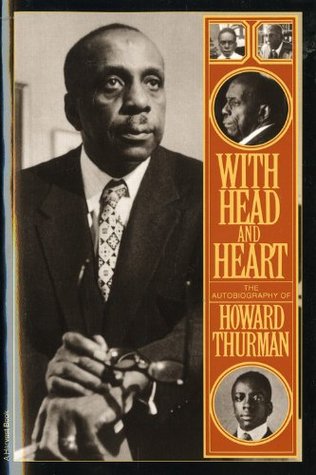
With Head and Heart: The Autobiography of Howard Thurman
by Howard Thurman

Howard Thurman was a unique man-a black minister, philosopher, and educator whose vitality and vision touched the lives of countless people of all races, faiths, and cultures.


Image


Howard Thurman: Essential Writings
(Modern Spiritual Masters)
by Howard Thurman, Luther E. Smith Jr. (Introduction)

Howard Thurman was a preacher, educator, poet, theologian and civil rights leader best known for his ethical and cultural criticism. His writing influenced a wide audience, from Martin Luther King and Mohandas Gandhi to young students exploring faith and social responsibility.

Thurman was among the first preachers to conduct Christian services in a nontraditional way, drawing from such eastern religious faiths as Buddhism and Hinduism. His philosophy of interfaith worship and dialogue is reflected in this collection of his essential writings. It reminds us all that out of religious faith emerges social responsibility and the power to transform lives.

Howard Thurman (1900-1981), has been called ""one of the greatest spiritual resources of this nation."" His encounters with Gandhi in India helped instill his commitment to nonviolence. His identification of Jesus as one of the disinherited helped shape the thinking of Martin Luther King, Jr. His embrace of wisdom from other religious traditions emboldened interfaith cooperation and understanding.

Image
Post Reply

Who is online

Users browsing this forum: No registered users and 144 guests