Not sure if anyone has covered this in the past, but i just recently came across this amazing discovery and felt the need to share. Who knows, by shedding light on the research topic, more and more people might develop new and more efficient technology from looking at the advances of others.
I was looking up ways of building my own capacitor/battery ("Baghdad Battery" style) for powering small electronics and came across this article describing "Biobatteries". I had never heard the term before and was intrigued. Doing more research on the topic, i discovered that these particular batteries run off of sugar-based things such as Glucose and Maltodextrin. This got me curious on how to recreate my own battery because of the abundance cheap cost of sugars and the fact that it's (As Far As I Know) a very green source of energy. Along with this, it is also stated that these batteries drastically out-perform Lithium Ion cells, powering a phone for 10 days instead of one. I had heard of this "Soda Powered Phone" a long time ago (around 2010-2011 or so) and simply thought it was a harmless, well designed april fools joke. Had i known it was real i would have been doing my research back then instead of now. The chief researcher (By the name of Y.H. Percival Zhang) stated that the batteries could be commercialized in 3 years back in 2014 and Sony was also able to create a functional battery that worked by simply adding a sugar solution to it.
On a fascinating note, these glucose based batteries might be the future for powering implants. For instance MIT researchers have created just such a fuel cell in order to power implanted brain-computer interfaces. As i don't like to plagiarize people, i will leave the link to this research topic below as well.
Links to findings:
Sugar Batteries: https://www.extremetech.com/extreme/175 ... on-enzymes
Sony Sugar Battery: https://books.google.no/books?id=IBzSBQ ... &q&f=false
Soda Powered Phone: https://www.greenoptimistic.com/modifie ... -20100115/
MIT Glucose Fuel Cell: https://www.extremetech.com/extreme/130 ... interfaces
Biobatteries
Re: Biobatteries
Hello kokuntetsu!
Interesting topic! Biobatteries is something I myself found interesting for quite a while. Back in my early days, I had a goal, and that was to creat life using only natural ingredients and proteins, of course it didn't work though.
However biobatteries is a much more realistic and natural way of doing things. I believe what you mean by biobatteries is getting power from natural elements such as plants?
Interestingly, many people even use biobatteries to power their greenhouses.
Something that I thought was really fascinating and is quite similar to biobatteries is hydroponics. You are probably familiar with this this, but just to say it anyway: hydroponics means growing plants without soil, but only with water, gravel, and different nutrients. Here's a link for more info
http://www.simplyhydro.com/whatis.htm
I apologize for not giving any actual answers on this post, i just thought it was needed to point out the interesting information within biological research. Once again, interesting post you have here. Going more on the organic side are we?
Interesting topic! Biobatteries is something I myself found interesting for quite a while. Back in my early days, I had a goal, and that was to creat life using only natural ingredients and proteins, of course it didn't work though.
However biobatteries is a much more realistic and natural way of doing things. I believe what you mean by biobatteries is getting power from natural elements such as plants?
Interestingly, many people even use biobatteries to power their greenhouses.
Something that I thought was really fascinating and is quite similar to biobatteries is hydroponics. You are probably familiar with this this, but just to say it anyway: hydroponics means growing plants without soil, but only with water, gravel, and different nutrients. Here's a link for more info
http://www.simplyhydro.com/whatis.htm
I apologize for not giving any actual answers on this post, i just thought it was needed to point out the interesting information within biological research. Once again, interesting post you have here. Going more on the organic side are we?
Then he said, "I lostmyhead" can you see it?
Re: Biobatteries
Now that's a fascinating topic! I opened the thread expecting too see something like these school science experiments in which you power a LED or another small item with the chemical reaction from a lemon and from other fruits and vegetables, but that's a whole different level.
I'll try to see if I can replicate it myself!
I'll try to see if I can replicate it myself!
-
Redbeck
- Site Admin
- Posts: 2144
- Joined: 19 Dec 2010 15:42
- Location: The Rookery, 3rd Horse Chestnut along, St Johns, Britain. Teacher leave our nuts alone!
- Contact:
Re: Biobatteries
Koguntetsu, this is an absolutely brilliant topic, yes I think that it has been raised before in the dim mists of time but it most worthy of a resurgence of interest. Sh3rl0ck an enervating shift towards bio-batteries and Yak_NN the name sounds familiar but perhaps I am mistaken... so one way or another, it's either welcome, or welcome back to the Oracle Forum community and thank you most kindly for your question. Redbeck.
As some of you may have deduced I am an avid permaculturist, sustainable food production and water supply being two of the most serious problems humankind faces in terms of the short to medium term future. Conserving and recycling this water supply is essential.
Therefore, if you need to heat the water for washing purposes form the basis of a large thermal battery compost water heater by building up a large compost heap of fallen plant matter. Drive in a circle of tree posts, but fire-waterproof the points and below ground sections to preserve them for future use in other applications. Wind approximately 1OO metres of hose pipe around the central ring of posts. Connect one end of the pipe to a cold water source and introduce a tap at the other end of the pipe which logically should include a gravity-drop run into a low water loss receptacle. Pile 5 to 7 feet of compost on top of and surrounding the posts, spontaneous thermal combustion chemistry within the organic matter will naturally occur at the central core of the compost and heat the water in the coiled pipe. The resulting hot water can then be fed to a shower head at a lower ground level location without a pump or bucketed for flannel wash and pour over rinse purposes in a run off capture area, for subsequent use in polytunnel or vegetable patch irrigation or onward transfer to swale and berm-side planted orchard setups.


As some of you may have deduced I am an avid permaculturist, sustainable food production and water supply being two of the most serious problems humankind faces in terms of the short to medium term future. Conserving and recycling this water supply is essential.
Therefore, if you need to heat the water for washing purposes form the basis of a large thermal battery compost water heater by building up a large compost heap of fallen plant matter. Drive in a circle of tree posts, but fire-waterproof the points and below ground sections to preserve them for future use in other applications. Wind approximately 1OO metres of hose pipe around the central ring of posts. Connect one end of the pipe to a cold water source and introduce a tap at the other end of the pipe which logically should include a gravity-drop run into a low water loss receptacle. Pile 5 to 7 feet of compost on top of and surrounding the posts, spontaneous thermal combustion chemistry within the organic matter will naturally occur at the central core of the compost and heat the water in the coiled pipe. The resulting hot water can then be fed to a shower head at a lower ground level location without a pump or bucketed for flannel wash and pour over rinse purposes in a run off capture area, for subsequent use in polytunnel or vegetable patch irrigation or onward transfer to swale and berm-side planted orchard setups.
Re: Biobatteries
Greetings Redbeck!
It certainly is enervating I must say;)
My post was a bit off topic and maybe quite the opposite of the topics subject, although I wanted to point out hydroponics because I was recently studying on that particular topic, and noticed that koguntetsu posted something on the topic of organic matter. I felt it was my opportunity to post something of the organic subject.
Maybe we should open up a organic topic place? I am quite diverse in the subject of agriculture and botany. *ahem the study of physiology, structure, genetics, distribution, classification, and economic importance in plants. Although I am more advanced in the subject of poisons when it comes to botany. . .
"Don't worry, it's for a case!"
but lets get back on topic. Imagine if we could power electronics using organic compounds, oh wait, yes, that is what bio batteries are.
"A significant advantage that bio-batteries have in comparison to other batteries is their ability to allow an instant recharge. In other words, through a constant supply of sugar, or glucose, bio batteries are able to continuously keep themselves charged without an external power supply. Bio batteries are also a source of non-flammable, and non-toxic fuel. This provides a clean alternative renewable power source."
(*text in quotations are from a source: wikipedia)
"don't judge, I occasionally use wikipedia as my source for information. I am a man of simplicity you know;)
Best regards,
Sh3rl0ck
It certainly is enervating I must say;)
My post was a bit off topic and maybe quite the opposite of the topics subject, although I wanted to point out hydroponics because I was recently studying on that particular topic, and noticed that koguntetsu posted something on the topic of organic matter. I felt it was my opportunity to post something of the organic subject.
Maybe we should open up a organic topic place? I am quite diverse in the subject of agriculture and botany. *ahem the study of physiology, structure, genetics, distribution, classification, and economic importance in plants. Although I am more advanced in the subject of poisons when it comes to botany. . .
"Don't worry, it's for a case!"
but lets get back on topic. Imagine if we could power electronics using organic compounds, oh wait, yes, that is what bio batteries are.
"A significant advantage that bio-batteries have in comparison to other batteries is their ability to allow an instant recharge. In other words, through a constant supply of sugar, or glucose, bio batteries are able to continuously keep themselves charged without an external power supply. Bio batteries are also a source of non-flammable, and non-toxic fuel. This provides a clean alternative renewable power source."
(*text in quotations are from a source: wikipedia)
"don't judge, I occasionally use wikipedia as my source for information. I am a man of simplicity you know;)
Best regards,
Sh3rl0ck
Then he said, "I lostmyhead" can you see it?
-
Koguntetsu

- Posts: 172
- Joined: 11 Feb 2018 11:19
- Contact:
Re: Biobatteries
What an incredible invention you have brought to the table here, Redbeck. I have never heard of this specific type of water heating method before (spontaneous thermal combustion chemistry) and it gave me a number of thoughts, including alternative methods of creating electricity. For example, it may very well be possible to use a modified form of this device in conjunction with Thermoelectric generators to charge up lithium ion battery packs (like ones made from 18650 cells).Redbeck wrote: 04 Mar 2019 20:46 Therefore, if you need to heat the water for washing purposes form the basis of a large thermal battery compost water heater by building up a large compost heap of fallen plant matter. Drive in a circle of tree posts, but fire-waterproof the points and below ground sections to preserve them for future use in other applications. Wind approximately 1OO metres of hose pipe around the central ring of posts. Connect one end of the pipe to a cold water source and introduce a tap at the other end of the pipe which logically should include a gravity-drop run into a low water loss receptacle. Pile 5 to 7 feet of compost on top of and surrounding the posts, spontaneous thermal combustion chemistry within the organic matter will naturally occur at the central core of the compost and heat the water in the coiled pipe. The resulting hot water can then be fed to a shower head at a lower ground level location without a pump or bucketed for flannel wash and pour over rinse purposes in a run off capture area, for subsequent use in polytunnel or vegetable patch irrigation or onward transfer to swale and berm-side planted orchard setups.
If you manage to make a functional prototype I would be absolutely thrilled to take a peek at your research notes, diagrams, and schematics, as well as the chemical compositions of your sugar solutions.Yak_NN wrote: 28 Feb 2019 11:17 Now that's a fascinating topic! I opened the thread expecting too see something like these school science experiments in which you power a LED or another small item with the chemical reaction from a lemon and from other fruits and vegetables, but that's a whole different level.
I'll try to see if I can replicate it myself!
Re: Biobatteries
Good evening,
I just read that blog and now I am fully trying to realise it, but in one of the first posts there's something about the use of proteins in the making of energy that's a pretty interesting subject in biology and chemistry, thinking could someone try to tell me what the exact thinking of this was.
also sorry for any grammar or writing wrongs I got dyslexia and English isn't my mother language(':
I just read that blog and now I am fully trying to realise it, but in one of the first posts there's something about the use of proteins in the making of energy that's a pretty interesting subject in biology and chemistry, thinking could someone try to tell me what the exact thinking of this was.
also sorry for any grammar or writing wrongs I got dyslexia and English isn't my mother language(':
-
Redbeck
- Site Admin
- Posts: 2144
- Joined: 19 Dec 2010 15:42
- Location: The Rookery, 3rd Horse Chestnut along, St Johns, Britain. Teacher leave our nuts alone!
- Contact:
Re: Biobatteries
Hello Mangle413,
Welcome to the Oracle Forum community. and thank you for your post which I have edited for you, If you read through all the posts on this topic again that may help your understanding of the overall concept of compost power What is your mother language by the way?
For your information, Heat is a by-product of composting.
Composting is the natural breakdown of organic material, such as fruit and vegetable peelings, leaves, grass clippings and pulled weeds into a loose dark dark, soil-like substance. This substance is called compost, and is prized by all gardeners. When compost is added to soil it helps maintain the soil's pH and improves its fertility, structure, texture, aeration, and nutrient content.
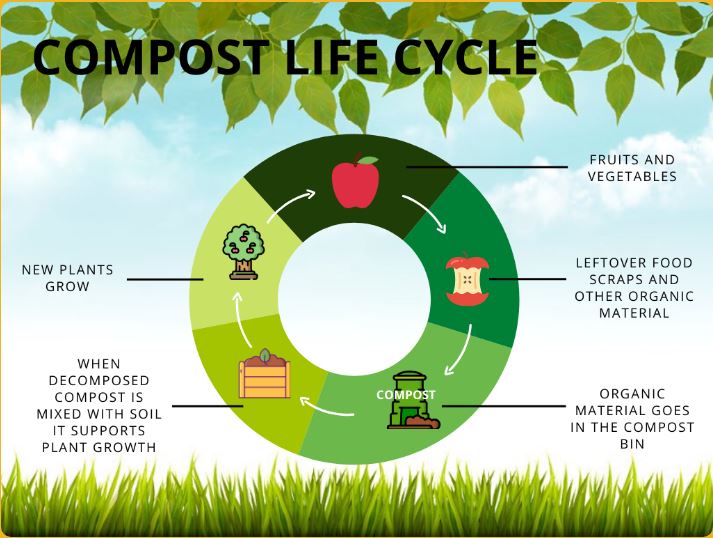
The heat is generated through the microbial breakdown of the organic material in what is usually a large compost pile. The heat that is produced depends, in part, upon the carbon-to-nitrogen ratio or C:N ratio. For the best results, the composting microbes require the right amount of carbon for energy, and nitrogen for protein production. The ideal C:N ratio is 30:1. A large compost pile can produce temperatures of 60°C–70°C. Turning or aerating the compost pile reduces the temperature of the pile in the event that the heat generated is excessive. If the compost pile gets too hot (beyond 65°C), then the most effective microbes responsible for decomposition can die. Aerating also adds oxygen, which is required to support microbial cellular activity in the compost pile. Initially, it is mesophilic bacteria that break down the soluble, readily degradable material in a compost pile. The heat they produce causes the compost temperature to rise rapidly. At about 40°C, the mesophilic bacteria start to die or move to the outer part of the pile and are replaced by heat-loving thermophilic bacteria. The thermophilic bacteria continue to break down the proteins, fats, and complex carbohydrates in the compost. After the supply of high-energy compounds is exhausted, the temperature of the compost pile falls rapidly and mesophilic bacteria take over again to complete the transformation of the remaining organic material in the compost pile. Depending on the size of the compost pile or bin, the thermophilic stage can last for several weeks or months.
Welcome to the Oracle Forum community. and thank you for your post which I have edited for you, If you read through all the posts on this topic again that may help your understanding of the overall concept of compost power What is your mother language by the way?
For your information, Heat is a by-product of composting.
Composting is the natural breakdown of organic material, such as fruit and vegetable peelings, leaves, grass clippings and pulled weeds into a loose dark dark, soil-like substance. This substance is called compost, and is prized by all gardeners. When compost is added to soil it helps maintain the soil's pH and improves its fertility, structure, texture, aeration, and nutrient content.
The heat is generated through the microbial breakdown of the organic material in what is usually a large compost pile. The heat that is produced depends, in part, upon the carbon-to-nitrogen ratio or C:N ratio. For the best results, the composting microbes require the right amount of carbon for energy, and nitrogen for protein production. The ideal C:N ratio is 30:1. A large compost pile can produce temperatures of 60°C–70°C. Turning or aerating the compost pile reduces the temperature of the pile in the event that the heat generated is excessive. If the compost pile gets too hot (beyond 65°C), then the most effective microbes responsible for decomposition can die. Aerating also adds oxygen, which is required to support microbial cellular activity in the compost pile. Initially, it is mesophilic bacteria that break down the soluble, readily degradable material in a compost pile. The heat they produce causes the compost temperature to rise rapidly. At about 40°C, the mesophilic bacteria start to die or move to the outer part of the pile and are replaced by heat-loving thermophilic bacteria. The thermophilic bacteria continue to break down the proteins, fats, and complex carbohydrates in the compost. After the supply of high-energy compounds is exhausted, the temperature of the compost pile falls rapidly and mesophilic bacteria take over again to complete the transformation of the remaining organic material in the compost pile. Depending on the size of the compost pile or bin, the thermophilic stage can last for several weeks or months.
Who is online
Users browsing this forum: Bing [Bot] and 27 guests