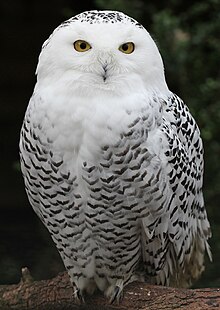
Perhaps a parliament of my believed Bubo Bubo decamped from a less tranquil sanctuary to commune with a more friendly crew of environmental revivers?
Owls of course have long been associated with wisdom firmly intertwined with Greek religion and mythology, but perhaps the following extract sums this synergy up far better than I.
'At one point an owl, its feathers brown and honey-coloured settled in a tree above, seemingly oblivious to us. It only stayed for a minute or two, turning it's head from side to side like a look-out, before flying off again.'
"It must have been resting," she said. "On its way across the lake."
"The owl of Minerva rises after dusk."
"What?"
"Wisdom is hindsight. The Greeks thought owls were the servants of the goddess of wisdom."
"They thought everything was like that, didn't they?" she said, brushing some crumbs off her. "Everything full of magic, everything following a pattern."
The Last King of Scotland - Giles Foden
Certainly the last sentence of that quotation, epitomises the swell of optimism gathered behind http://www.973-eht-namuh-973.com, as well as our fondness for owls and therefore naturally our affinity toward Athena the Greek Goddess of Wisdom.

Attica Athens, 449-404 BC. Silver 'old-style. tetradrachm. Depicting the helmeted head of Athena with frontal eye; reverse typical owl standing, olive sprig and crescent moon behind, all enclosed within incuse square.

Athena (naturally along with her owl familiar) was considered the goddess of most important aspects of a sophisticated cultural evolution:- wisdom, courage, inspiration, civilisation, law and justice, mathematics, strength, war strategy, the arts, crafts, and skill in ancient Greek religion and mythology. Perhaps an ultimate definition of the term 'cradle of civilisation'. Respected for her calm, disinclined to anger temperament, she is acknowledged to have fought only for just reasons, refusing to fight without a purpose.
Athena is presented as a shrewd companion of heroes and is the patron goddess of heroic endeavour. She is the virgin patroness of Athens and the Athenians founded the Parthenon on the Acropolis of what is her namesake city, (Athena Parthenos) in her honour. Athena Parthenos is the sadly long since lost, massive chryselephantine sculpture of the Greek goddess Athena, started by Phidias and his assistants in 447 BC and originally housed in the Parthenon, where it stood for 1,000 years until its removal by the Romans in the 5th century AD. The last mention of the enormous statue was in an account written in the 10th century which claimed it was still on view in Constantinople (now Istanbul) at that time.
Athena fervour persisted across such an immense span of generations that out of date myths about the goddess needed to be recast to adapt to cultural change. In her role as a protector of the city (polis), people throughout the Greek world worshipped Athena as Athena Polias "Athena of the city".