973 EHT NAMUH - 379 THE HUMAN
-
Auriorusiana
- Posts: 829
- Joined: 28 Nov 2020 00:28
- Contact:
Re: 973 EHT NAMUH - 379 THE HUMAN
i think the most of a satan opposed to God dynamic would be dualistic but that duality can show everything in between. just like the invention of fire we all used it in different directions.
-
Redbeck
- Site Admin
- Posts: 2144
- Joined: 19 Dec 2010 15:42
- Location: The Rookery, 3rd Horse Chestnut along, St Johns, Britain. Teacher leave our nuts alone!
- Contact:
Re: 973 EHT NAMUH - 379 THE HUMAN
Dear Auriorusiana
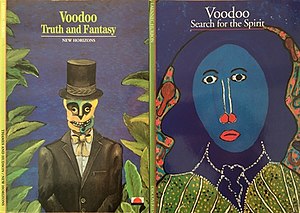
You asked about "What information do you have on the subject of voodoo, hoodoo, etc. African/native belief systems?" Well here are some pointers to information to be found on the 973-eht-namuh-973.com site.
Kind Regards Redbeck
http://973-eht-namuh-973.com/Alchemy/ADVENT%202041.htm


You asked about "What information do you have on the subject of voodoo, hoodoo, etc. African/native belief systems?" Well here are some pointers to information to be found on the 973-eht-namuh-973.com site.
Kind Regards Redbeck
http://973-eht-namuh-973.com/Alchemy/ADVENT%202041.htm


Re: 973 EHT NAMUH - 379 THE HUMAN
Hoodoo is such an interesting mix of beliefs. It makes me wish I had access to some resources to learn about Native African religion. Hoodoo is such an eclectic practice.Redbeck wrote: 29 Apr 2021 22:58 Back to the main thrust of your topic warrioroftheyuga, and welcome to the Oracle Community and thank you for your thought proving text, forgive me if I haven't said so already.
The Voodoo altar reflects a vibrating mix of beliefs. Redbeck

Here in the Gulf, an interesting projection of Hoodoo religious beliefs are light blue porch ceilings! Africans believed that spirits cannot cross water, so painting a ceiling that shade of blue tricks them into thinking they're underwater, so they leave your porch door in a panic, If I recall correctly.
Feel free to send me a PM or an email. Expect faster responses by email.
Re: 973 EHT NAMUH - 379 THE HUMAN
Nazheek wrote: 16 May 2021 19:42Hoodoo is such an interesting mix of beliefs. It makes me wish I had access to some resources to learn about Native African religion. Hoodoo is such an eclectic practice.Redbeck wrote: 29 Apr 2021 22:58 Back to the main thrust of your topic warrioroftheyuga, and welcome to the Oracle Community and thank you for your thought proving text, forgive me if I haven't said so already.
The Voodoo altar reflects a vibrating mix of beliefs. Redbeck
Here in the Gulf, an interesting projection of Hoodoo religious beliefs are light blue porch ceilings! Africans believed that spirits cannot cross water, so painting a ceiling that shade of blue tricks them into thinking they're underwater, so they leave your porch door in a panic, If I recall correctly.

Feel free to send me a PM or an email. Expect faster responses by email.
-
Redbeck
- Site Admin
- Posts: 2144
- Joined: 19 Dec 2010 15:42
- Location: The Rookery, 3rd Horse Chestnut along, St Johns, Britain. Teacher leave our nuts alone!
- Contact:
Re: 973 EHT NAMUH - 379 THE HUMAN
Yes indeed Nazheek, Gullah folklore held that ghosts—known as “haints” (and pronounced “haunts”) in the Creole dialect—could not cross water, and because blue resembles water, ceilings were painted this color to repel evil spirits.
The Gullah are African Americans who live in the low country region of the U.S. states of Georgia, Florida, and South Carolina, in both the coastal plain and the Sea Islands. They developed a creole language, also called Gullah, and a culture with some African influence.
Gullah descendants continue to lead a spiritual life in 2021 that influences every part of their lives. They believe in the dual nature of the soul and spirit. In death, a soul is returned to God but the spirit remains on earth to live among the deceased’s descendants. It is common for funerals to be ornate and for mourners to decorate graves using items that belonged to the newly passed away. The Gullah people believe the spirit of their ancestors participates in their daily affairs and protects and guides them using spiritual forces.
Other traditions practiced by Christian Gullahs include Praise Houses (Pray’s Houses) and Shouting or Ring Shouts. Praise houses are small wooden buildings located away from the community where worshipers could freely express their faith and emotions. They were used to strengthen one’s faith, examine new members, and provide spiritual guidance for the community. Shouting or Ring Shouts are an integral part of the Praise House. In a Ring Shout, men and women form a circle and sing, clap their hands, and shuffle or stomp their feet in a fast paced, rhythmic beat. They often move in a counter-clockwise direction. Ring Shouts are thought to be the remnants of African ceremonial dances that were a part of African religious traditions. The word “shout” is thought to be derived from “saut,” a West African word of Arabic origin that describes an Islamic religious movement performed to exhaustion. Islam’s legacy continues in the Gullah community. It began in early colonial North America where the low country hosted the largest community of African Muslims. These Muslims were primarily in the Sea Islands of Sapelo, Saint Simon’s and Saint Helena.
While many people in the low country turned to religion to alleviate their oppression, other people used conjuring to protect against the evils of slavery. Conjuring in the low country is a practice from West and West Central Africa. The Gullah community perceived this “magic art” to be very powerful. Yet there are subtle differences in how the Gullahs/Geechees practiced conjuring and how West Africans practiced it. There the community had men called fetish priests. The priests were sacred figures in the community because they had the ability to create powerful fetishes to protect the people of the community. These fetishes were made of wood, horn of goat, hoof of antelope, piece of metal or ivory, hair of someone’s head and fingernail clippings. They were placed along the coastal line as “outsiders” entered the region. Also, they were placed along paths, at the gate of every village, door of every house, crossing place of streams and around the neck of everyone. Before the fetishes were positioned in their respective places, they received supernatural powers from the hands of the fetish priests.
Kind Regards Redbeck
Some voodoo aspects of the David Denison starship:-


The Gullah are African Americans who live in the low country region of the U.S. states of Georgia, Florida, and South Carolina, in both the coastal plain and the Sea Islands. They developed a creole language, also called Gullah, and a culture with some African influence.
Gullah descendants continue to lead a spiritual life in 2021 that influences every part of their lives. They believe in the dual nature of the soul and spirit. In death, a soul is returned to God but the spirit remains on earth to live among the deceased’s descendants. It is common for funerals to be ornate and for mourners to decorate graves using items that belonged to the newly passed away. The Gullah people believe the spirit of their ancestors participates in their daily affairs and protects and guides them using spiritual forces.
Other traditions practiced by Christian Gullahs include Praise Houses (Pray’s Houses) and Shouting or Ring Shouts. Praise houses are small wooden buildings located away from the community where worshipers could freely express their faith and emotions. They were used to strengthen one’s faith, examine new members, and provide spiritual guidance for the community. Shouting or Ring Shouts are an integral part of the Praise House. In a Ring Shout, men and women form a circle and sing, clap their hands, and shuffle or stomp their feet in a fast paced, rhythmic beat. They often move in a counter-clockwise direction. Ring Shouts are thought to be the remnants of African ceremonial dances that were a part of African religious traditions. The word “shout” is thought to be derived from “saut,” a West African word of Arabic origin that describes an Islamic religious movement performed to exhaustion. Islam’s legacy continues in the Gullah community. It began in early colonial North America where the low country hosted the largest community of African Muslims. These Muslims were primarily in the Sea Islands of Sapelo, Saint Simon’s and Saint Helena.
While many people in the low country turned to religion to alleviate their oppression, other people used conjuring to protect against the evils of slavery. Conjuring in the low country is a practice from West and West Central Africa. The Gullah community perceived this “magic art” to be very powerful. Yet there are subtle differences in how the Gullahs/Geechees practiced conjuring and how West Africans practiced it. There the community had men called fetish priests. The priests were sacred figures in the community because they had the ability to create powerful fetishes to protect the people of the community. These fetishes were made of wood, horn of goat, hoof of antelope, piece of metal or ivory, hair of someone’s head and fingernail clippings. They were placed along the coastal line as “outsiders” entered the region. Also, they were placed along paths, at the gate of every village, door of every house, crossing place of streams and around the neck of everyone. Before the fetishes were positioned in their respective places, they received supernatural powers from the hands of the fetish priests.
Kind Regards Redbeck
Some voodoo aspects of the David Denison starship:-
-
99Quester99

- Posts: 2
- Joined: 19 May 2021 18:28
- Contact:
Re: 973 EHT NAMUH - 379 THE HUMAN
I had also noticed that with the coding and vast lettering, one would believe it to be ''devil workings'' or w/e. Is not "The Devil" in us all at one point? Is this devil not apart of all, and nothing at all? All at once? Yeah I see no (devils) here, just information about humans and the quest of knowledge(s). I am seriously seeking answers to various questions, some of which I have yet to discover how to word-or even question them. Still looking for the holy grail and philosopher's stone, any leads?
-
packajos000
- Posts: 1421
- Joined: 28 Jan 2016 04:10
- Contact:
Re: 973 EHT NAMUH - 379 THE HUMAN
Where be IT?. .. …
Through the Portal we go to get what ye do not know.
[…]
Through the Portal we go to get what ye do not know.
[…]

Re: 973 EHT NAMUH - 379 THE HUMAN
Translates to 'The Human Eye"
i lie in the ground and fertilize mushrooms leaking gas fumes made into perfumes
Who is online
Users browsing this forum: Bing [Bot] and 1 guest