It seems like a more or less prerequisite to have any kind of esoteric interest or study to constantly have a mile-long backlog of unread books. What do you have coming up next?
I'm trying to comb back through the Hermetic Corpus again. I'm also working through Israel Regardie's black brick. i'm wanting to start building a reading list to better understand Qabbala as I think its untenable to try and build a gematria knowledge base without a foundation in Qabala.
Whats on your reading list?
Whats on your reading list?
Feel free to send me a PM or an email. Expect faster responses by email.
-
Redbeck
- Site Admin
- Posts: 2147
- Joined: 19 Dec 2010 15:42
- Location: The Rookery, 3rd Horse Chestnut along, St Johns, Britain. Teacher leave our nuts alone!
- Contact:
Re: Whats on your reading list?
My dear Nazheek, very interesting that you should raise this point. I have had a fleeting but interesting brush with Qabbala, which literally means the act of receiving, acceptation, in the past and intend to devote more scholarly time to the topic . A few brief notes of mine:
Qabbala or Kabbalah is an esoteric methodology, discipline, and school of thought found in Jewish mysticism, forming the foundation of mystical religious interpretations within Judaism. A traditional Kabbalist is known as a Mekubbal.
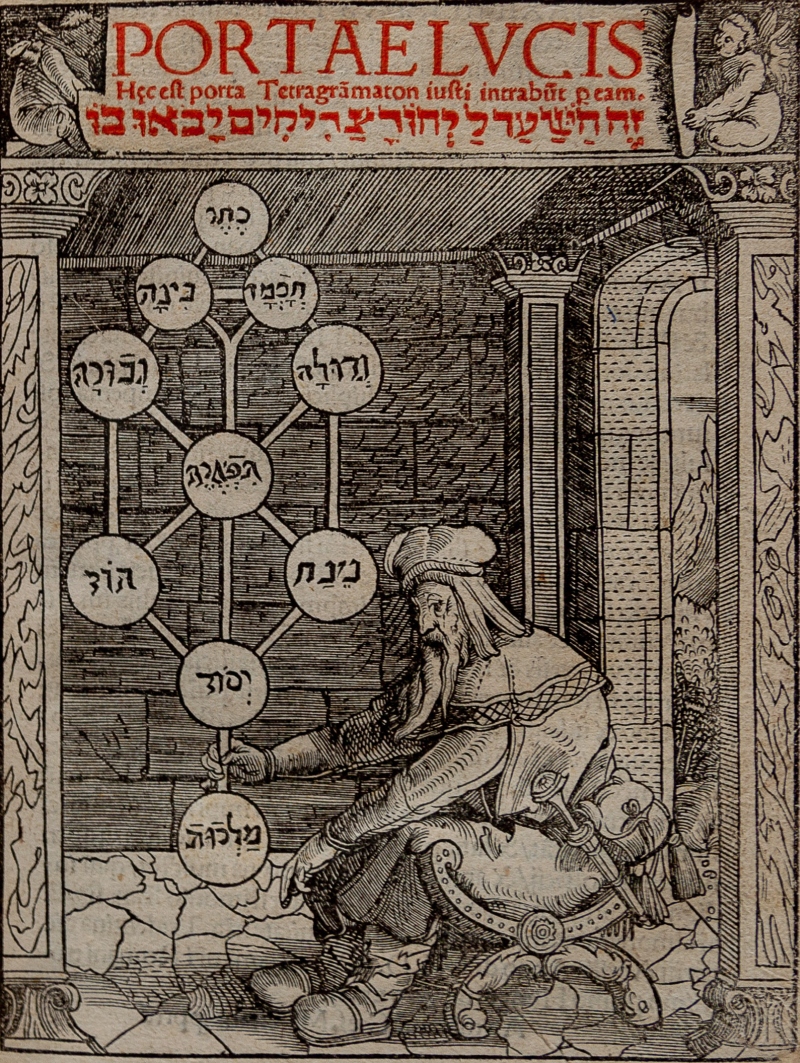
The roots of Jewish mysticism can be traced back to the biblical era, where named prophets such as Elijah and Ezekiel experienced divine visions and encounters. The works of Joseph ben Abraham who was a Castilian kabbalist born in 1248 in Medinaceli who died after 1305 in Penafie, Castile and Leon, Spain. His works, particularly his major work, Sha'arei Orah (Gates of Light, originally written before 1293), had a profound influence on the later development of both Jewish and Christian mysticism.
Portae Lucis (1516) Latin translation of Gikatilla's Shaarei Ora
https://www.britishmuseum.org/collectio ... -1008-1942
Qabbala or Kabbalah is an esoteric methodology, discipline, and school of thought found in Jewish mysticism, forming the foundation of mystical religious interpretations within Judaism. A traditional Kabbalist is known as a Mekubbal.
The roots of Jewish mysticism can be traced back to the biblical era, where named prophets such as Elijah and Ezekiel experienced divine visions and encounters. The works of Joseph ben Abraham who was a Castilian kabbalist born in 1248 in Medinaceli who died after 1305 in Penafie, Castile and Leon, Spain. His works, particularly his major work, Sha'arei Orah (Gates of Light, originally written before 1293), had a profound influence on the later development of both Jewish and Christian mysticism.
Portae Lucis (1516) Latin translation of Gikatilla's Shaarei Ora
https://www.britishmuseum.org/collectio ... -1008-1942
Re: Whats on your reading list?
That is a very interesting illustration of the tree of life Redbeck! I've given consideration into collecting early-modern and pre-modern esoteric art.
I am very keenly interested in anthropology and so I'm naturally want to learn about how individual historic Qabbalists had to live their lives, especially in places like Spain which would face significant inquisitorial pressure. This always inevitably creates deep and beautiful allegory to keep the initiatic lineage intact, similar to alchemy was created in part to preserve some teachings sub rosa.
I am think perhaps it is time for me to read the Chicken Qabbala? My only real exposure to Qabbala has been theough the Golden Dawn curriculum. There was an interesting bit in Israel Regardie's writing on their curriculum which tied the caduceus to parts of the tree of life somewhat like so:

I am very keenly interested in anthropology and so I'm naturally want to learn about how individual historic Qabbalists had to live their lives, especially in places like Spain which would face significant inquisitorial pressure. This always inevitably creates deep and beautiful allegory to keep the initiatic lineage intact, similar to alchemy was created in part to preserve some teachings sub rosa.
I am think perhaps it is time for me to read the Chicken Qabbala? My only real exposure to Qabbala has been theough the Golden Dawn curriculum. There was an interesting bit in Israel Regardie's writing on their curriculum which tied the caduceus to parts of the tree of life somewhat like so:
Feel free to send me a PM or an email. Expect faster responses by email.
-
Redbeck
- Site Admin
- Posts: 2147
- Joined: 19 Dec 2010 15:42
- Location: The Rookery, 3rd Horse Chestnut along, St Johns, Britain. Teacher leave our nuts alone!
- Contact:
Re: Whats on your reading list?
Another interest piquing post Nazheek, as ever thank you. Redbeck
Israel Regardie's writings on the Tree of Life and the caduceus are heavily intertwined with the Golden Dawn tradition. In his work, Regardie explores the Tree of Life as a representation of the mystical hierarchy, where each element corresponds to a specific sephiroth, such as Hod (Herald of Fire) and Yesod (Herald of Air).
The word Sephiroth is derived from a root word in Hebrew meaning “to count” or “to tell,” and also sometimes connected with the word “sapphire” due to its interpretation of divine radiance and illumination. Sephiroth are the ten divine emanations in Kabbalah through which God reveals Himself and manifests creation.
The caduceus, often associated with the Tree of Life, symbolises the unity of opposites and the interconnectedness of all things. Regardie's teachings highlight the importance of understanding these concepts to achieve spiritual enlightenment and mastery of the magical arts. His writings have influenced the esoteric community significantly, projecting him into a role as a pivotal figure in the field of study relative to occultism and the Qabalah.
The Sefirot in Kabbalah

The Tree of Life

Israel Regardie's writings on the Tree of Life and the caduceus are heavily intertwined with the Golden Dawn tradition. In his work, Regardie explores the Tree of Life as a representation of the mystical hierarchy, where each element corresponds to a specific sephiroth, such as Hod (Herald of Fire) and Yesod (Herald of Air).
The word Sephiroth is derived from a root word in Hebrew meaning “to count” or “to tell,” and also sometimes connected with the word “sapphire” due to its interpretation of divine radiance and illumination. Sephiroth are the ten divine emanations in Kabbalah through which God reveals Himself and manifests creation.
The caduceus, often associated with the Tree of Life, symbolises the unity of opposites and the interconnectedness of all things. Regardie's teachings highlight the importance of understanding these concepts to achieve spiritual enlightenment and mastery of the magical arts. His writings have influenced the esoteric community significantly, projecting him into a role as a pivotal figure in the field of study relative to occultism and the Qabalah.
The Sefirot in Kabbalah
The Tree of Life
Who is online
Users browsing this forum: No registered users and 1 guest