Every day of the week, religious and non-religious people alike follow the old pagan tradition of giving thanks
to the gods of old.
In ancient Mesopotamia, astrologers assigned each day of the week the name of a god, in a culture where
where days were consumed by religion, it is unsurprising that the days of the week were made in homage to
the gods believed to rule the lives of mortals.
Many centuries later, the Romans, upon beginning to use the seven day week, adopted the names of the week
to fit their own gods, these were then adopted by Germanic people who also adjusted the names according to
their gods. It is predominantly these Germanic and Norse gods that have lived on today in the days of the week.
Sunday is the "Sun's Day" the name of a pagan Roman holiday, in many folklore traditions, Sunday was believed
to be a lucky day for babies born. Many societies have worshipped the sun and sun-gods, perhaps the famous is
the Egyptian Sun-God "Ra", who was the Lord of time.
Monday comes from the Anglo-Saxon "monandaeg" which is "Moons Day" , on this day people gave homage to
the goddess of the moon, it was believed by ancients that there were three Monday's during the year that were
considered to be unlucky, first Monday in April, second in August and last in December.
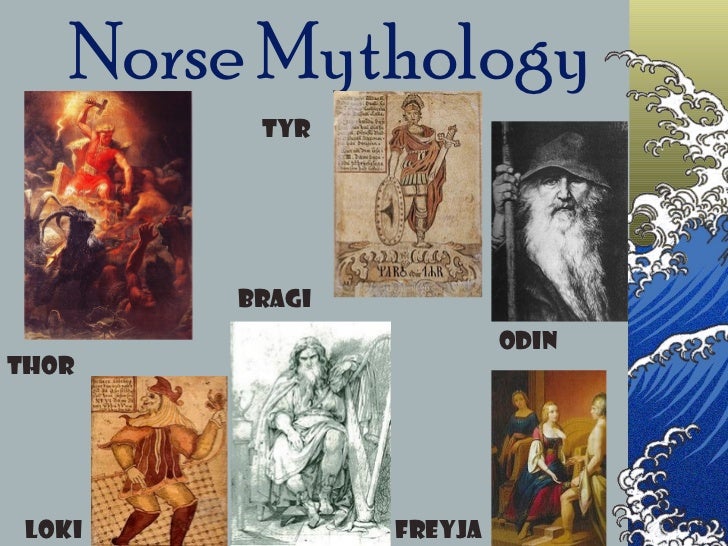
Tuesday is the first to be named after a Germanic god-Tui or (Twia) a God of war and the sky and associated
with the Norse god Tyr, who was a defender god in Viking mythology with Mars, he is usually shown with only
one hand. In the famous myth about Tyr he placed his hand between the jaws of the wolf Fenrir as a mark of
good faith while the other gods, pretending to play, bound the wolf, when Fenrir realised he had been tricked
he bit off Tyr's hand.
Wednesday means "Woden's Day" (in Norse, "Odin), the Old Norse's equivalent to Mercury, who was the messenger
to the gods and the Roman god of commerce, travel and science. He was considered the chief god and leader of
the wild hunt in Anglo-Saxon mythology, but the name directly translated means "violently insane headship" not
exactly the of a loving and kind god, Woden was the ruler of Asgard, the hoe of the gods, and is able to shift and
change into different forms.
Thursday was "Thor's Day", named after the Norse god of thunder and lightning and is the a Old Norse equivalent
to Jupiter, Thor is often depicted holding a giant hammer and during the 10tth and 11th centuries when Christians
tried to convert the Scandinavians, many wore emblems of Thor's hammer as a symbol of defiance against the new
religion.
Friday is associated with "Freya" the wife of Woden and the Norse goddess of love,marriage and fertility, who is
equivalent to Venus, the Roman goddess of love.
Lastly, Saturday derives from "Saturn's Day", a Roman god associated with wealth, plenty and time, it is the only
English week-day still associated with Roman god, Saturn.
The Hebrews called Saturday the "Sabbath", meaning the day of rest, th bible identifies Saturday as the last day
of the week.
Moon 3
Tiu 5
Woden 7
Thor 7
Frevia 7
Saturn 4
The seven days add up to 6