galdRastaffIR

Click 'The Oracle' title above to enter The Oracle Forum and discuss your quest for answers with kindred spirits. Courtesy costs nothing - if you disagree with someone, disagree politely. Abuse is not tolerated.
Post Reply
Nazheek
Posts: 424
Joined: 30 Nov 2015 18:26
Location: US Southeast
Contact:

galdRastaffIR

Post by Nazheek »

The Galdrastaffir, or Icelandic Staves, are a sigil-like work discovered in a tome in Iceland.

Iceland, being a last vestage of pre-christian European faith up until the conversion of the King of Denmark, and even some time after, likely has many such relics.

These staves would usually be drawn on the magician's hand in spit, blood, or other such fluids. Sometimes they would be carved into a stone and the etches were dyed red, much like a runestone would. Staves could be paired with another as was used with the Ginfaxi "wrestling" stave pair, or used in ones.

The construction of these remains enigmatic, and will be the subject of my discussion today.

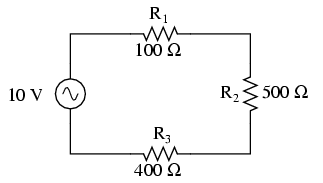
One theory that has been proposed is what I like to call the 'circuit theory'.
Image
The basis of the theory is that the staves were circuits of magickal 'energy' and the symbols on a stave identified things such as collection, distribution, switches, etc. This theory does not have evidence besides its basic logic, and seeing how Icelandic peoples did not have a concept of 'energy', I do not find it to hold stone.

Another prevailing theory is one I call the 'rune theory', which I believe is the most likely.
Image
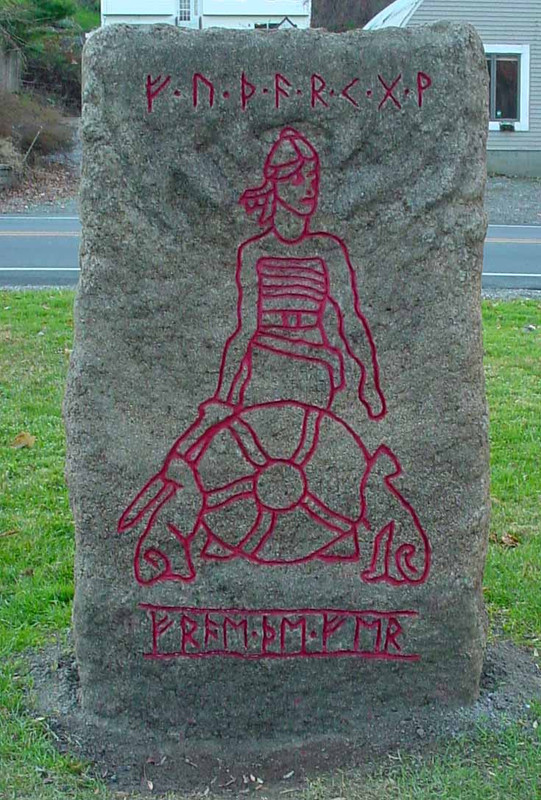
This idea states that the staff is a rube-goldberg type mashup of runes to create a function. For example, one of the staves could mean 'unfettered wisdom', which could be a combination of Uruz (durabilitu), Wunjo (odin, wisdom), and Fehu (Property, ownership). The staves do align with some of their runic counterparts typically, with one exception I will discuss shortly.

The primary argument against that theory is the similarities many staves have with semitic 'sigils' which do not have amything to do with runes. My counterclaim has to do with the exception I mentioned earlier.

The staves had asymmetric and symmetric versions. The symmetric versions such as the cartwheel and the crest designs were christianizations. Christianity, being abrahamic, would logically bring some things from the semitic people, which is likely where those forms of staves origimated, thus also making the runic staves much, much older than the text they were found in.

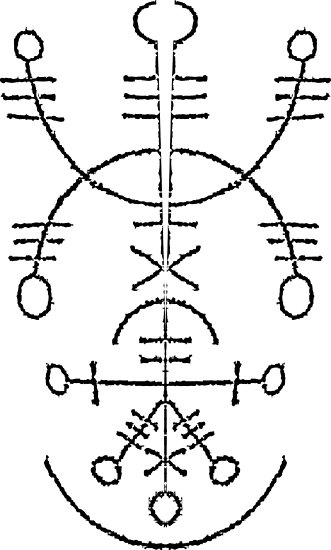
The below is an example of Galdrastaff.
Image

This particular example was used to 'create' necropants; a pair of trousers made from a dead man's skin that could make endless amounts of money.
Feel free to send me a PM or an email. Expect faster responses by email.
Nazheek
Posts: 424
Joined: 30 Nov 2015 18:26
Location: US Southeast
Contact:

Re: galdRastaffIR

Post by Nazheek »

I should mention, that in the runestone shown above, the first text is part of the futhark 'alphabet', and the bottom is 'Freya the fair'. It is however spelt 'Frae þe fer' due to incompatibilities to English and Elder Futhark.
Feel free to send me a PM or an email. Expect faster responses by email.
Redbeck
Site Admin
Posts: 2148
Joined: 19 Dec 2010 15:42
Location: The Rookery, 3rd Horse Chestnut along, St Johns, Britain. Teacher leave our nuts alone!
Contact:

Re: galdRastaffIR

Post by Redbeck »

Icelandic magical staves Nazheek, well done that good fellow. Sorry it has taken me so long to catch up with this loitering gem. Redbeck

Galdrastafir (pl. of galdrastafur) is an Icelandic word which translates to [galdra] magical [stafi] sticks or staves. According to experts, one of which I am not, they were inherited from the old technical designation of runes as staves or sticks because the markings were often carved on these objects for talismanic purposes. They borrowed and continue to borrow concepts from pagan times, from Viking lives, from the Norse/Nordic gods, myths and folklore, as well aas from runic characters. However, they also reflect issues that were current for their times across both pagan and Christian beliefs. It is likely that Galdrastafir gained popularity in Iceland after other symbols were seen in middle-age grimoires from mainland Europe.They are accredited with a magical effect preserved in various grimoires dating from the 17th century and later.

My first impact viewing of a galdrastafur symbol, as you might put it, was the Vegvísir tattoo on the arm of Icelandic singer Björk. With nothing but art in my heart I became immediately intrigued by the design, which then triggered my curiosity and an equiring mind did the rest, nonetheless I did not stick with the subject as long as I should have... with further learning on the subject written into my bucket list.


Image

Binding staves: To bind the marriage of two people, paint the Galdrastafir on to a catskin (other types of skin maybe used), with the blood and a feather......

Image

Image

The shape of the symbols may be grouped into five:

1. Asymmetrical - These are often the older galdrastafir, and rarely hold any Christian influence. They are characterised more according to the traditional definition of stafi, most commonly employing straight lines intersected with other lines or small shapes. These small shapes are runes in the very old definition sense, i.e. a character with hidden meaning. Only very occasionally are one or more recognisible runes used, yet it is a fallacy to presume galdrastafir are made up of Futhark rune characters.

2. Symmetrical - These chronologically younger galdrastafir have greater esthetic value and range from the most simple to very complex and elaborate forms. Some intermix Christian and Pagan elements, or are solely Christian related. Many of them take the cartwheel form, frequently presenting identical rune shapes at the end of each spoke.

3. Runic - These are generally a string of single or multiple characters. Again, the meaning of the runic shapes are usually unknown or unclear to us.

4. Seal/Insignia - These are almost all Christian influenced, with names given to the symbol such as Seal of Jesus or other entities including Christian leaders, monarchs and angels. The most frequent of these refer to Jesus/Christ/Jehovah/IHS, King Solomon or are labeled as a Rood Cross. Many appear to contain shapes and words similar to those found in early-modern European grimoires.

5. Superstaves - These are the most complex and often the most beautiful of the symbols. They often fall under the Rood-cross banner (spelt variously in Icelandic as Rúdukross, Ródukross or Rotaskross) and are mostly used for protection against evil.
Post Reply

Who is online

Users browsing this forum: No registered users and 3 guests