I do not believe this is alchemy perhaps a darker part of alchemy and I'm on the journey to find out the true meaning to this site and others alike but it is hard to get the answers I'm looking for because of the secrecy so if anyone would like to help each other to find the true meaning to the maze or the code message me soon i will know the meaning and i will never return to the site again but I'm willing to enlighten the few that will read this
Thank you for your time, after all, there's not much left ....
The true meaning
-
i.see.u.2.
- Posts: 11
- Joined: 07 Jan 2020 17:56
- Location: 999999999999999999
- Contact:
-
Redbeck
- Site Admin
- Posts: 2144
- Joined: 19 Dec 2010 15:42
- Location: The Rookery, 3rd Horse Chestnut along, St Johns, Britain. Teacher leave our nuts alone!
- Contact:
Re: The true meaning
Dear i.see.u.2., it has taken me too long but here I am. Welcome to the Oracle Forum community and thank for your flurry of 11 posts. Ah yes alchemy, you say, and a darker part of alchemy at that. Surely there are darker sides of symbolism rather than purist alchemy.
For example: The 72 Demons of Solomon, note that 7+2=9, therefore the dark side of the number of power which may equally stand for good or evil. Regards Redbeck
The demons' names below are taken from a combination of the Ars Goetia, which differs in terms of number and ranking from the Pseudomonarchia Daemonum of Johann Weyer. As a result there are multiple translations, as well as multiple spellings for some of the names.
NOTES:-
Ars Goetia: The Lesser Key of Solomon, also known as Clavicula Salomonis Regis or Lemegeton, is an anonymous grimoire on demonology, compiled in the mid-17th century, from materials that were two centuries older. It is divided into five books—the Ars Goetia, Ars Theurgia-Goetia, Ars Paulina, Ars Almadel, and Ars Notoria.
Pseudomonarchia Daemonum, or False Monarchy of Demons, first appears as an Appendix to Johann Weyer's De praestigiis daemonum (1577). The ONLY demon which appears in Pseudomonarchia Daemonum but NOT in the Ars Goetia is Pruflas.


For example: The 72 Demons of Solomon, note that 7+2=9, therefore the dark side of the number of power which may equally stand for good or evil. Regards Redbeck
The demons' names below are taken from a combination of the Ars Goetia, which differs in terms of number and ranking from the Pseudomonarchia Daemonum of Johann Weyer. As a result there are multiple translations, as well as multiple spellings for some of the names.
NOTES:-
Ars Goetia: The Lesser Key of Solomon, also known as Clavicula Salomonis Regis or Lemegeton, is an anonymous grimoire on demonology, compiled in the mid-17th century, from materials that were two centuries older. It is divided into five books—the Ars Goetia, Ars Theurgia-Goetia, Ars Paulina, Ars Almadel, and Ars Notoria.
Pseudomonarchia Daemonum, or False Monarchy of Demons, first appears as an Appendix to Johann Weyer's De praestigiis daemonum (1577). The ONLY demon which appears in Pseudomonarchia Daemonum but NOT in the Ars Goetia is Pruflas.

--------------------
--------------------
Last edited by BeN1 on 22 Jul 2023 10:34, edited 1 time in total.
HADOUKEN!! 🤲🔥
-
Redbeck
- Site Admin
- Posts: 2144
- Joined: 19 Dec 2010 15:42
- Location: The Rookery, 3rd Horse Chestnut along, St Johns, Britain. Teacher leave our nuts alone!
- Contact:
Re: The true meaning
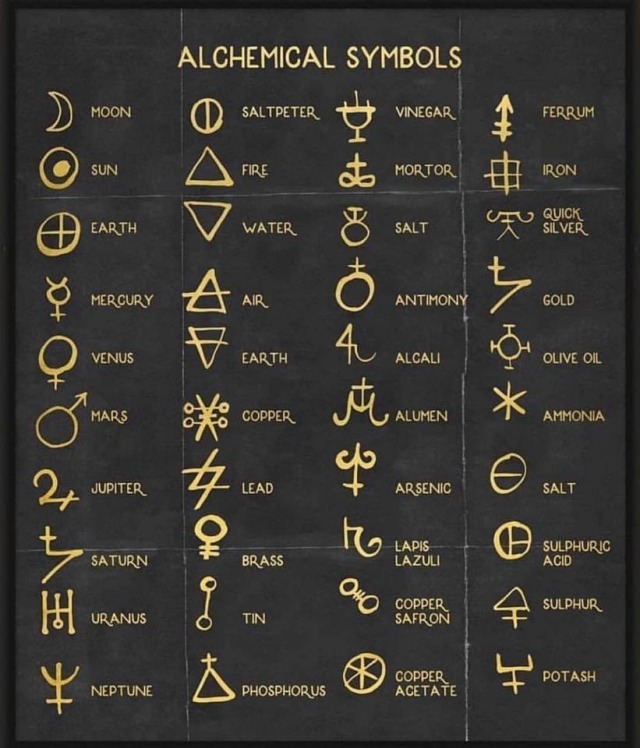
Greetings BeN1, That puzzled me too but the answer is that those on the black background in gold are more ancient than those contained in the beige pseudo scroll, the latter are allegedly 18th Century standardisations. Redbeck
Who is online
Users browsing this forum: Bing [Bot], Google [Bot] and 4 guests