The auspicious number 1836 comes up once again, this is the 1836th on the forum.
''The question has been asked again and again- Is there some means of knowing
when the moment has come to take the tide at the flood
EIGHTEEN+THIRTYSIX=9 9=EIGHTEEN+THIRTYSIX
GOD WITH US 1836 US WITH GOD
1936 A Numerical Signal To All
1836
-
Redbeck
- Site Admin
- Posts: 2147
- Joined: 19 Dec 2010 15:42
- Location: The Rookery, 3rd Horse Chestnut along, St Johns, Britain. Teacher leave our nuts alone!
- Contact:
Re: 1836
The mass of a proton is 1836 times the mass of an electron
Electric charge: the proton and electron are electrically charged, while a neutron is not. The proton and electron are however oppositely charged.
Individual roles within the atom are as follows: Protons and neutrons are closely bound together in the nucleus of an atom, while electrons are spread out around the nucleus.
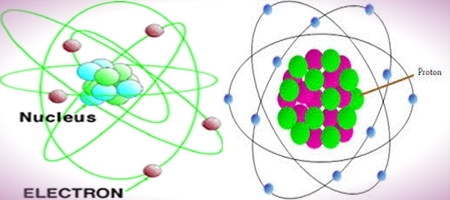
Interestingly this is not unlike the state of the world we live in, as it stands today: protons and neutrons are wealth and political power whilst the humble moths of humanity are the electrons circling the hypnotic flame, but what happens when electrons bond together?
Not unlike the human race electrons can be shared, either by creation of a covalent bond, or they may merely be borrowed which makes an ionic bond (also called an electrovalent bond). Could this fascinating analogy become known as sociological physics, I ask myself?
Electric charge: the proton and electron are electrically charged, while a neutron is not. The proton and electron are however oppositely charged.
Individual roles within the atom are as follows: Protons and neutrons are closely bound together in the nucleus of an atom, while electrons are spread out around the nucleus.

Interestingly this is not unlike the state of the world we live in, as it stands today: protons and neutrons are wealth and political power whilst the humble moths of humanity are the electrons circling the hypnotic flame, but what happens when electrons bond together?
Not unlike the human race electrons can be shared, either by creation of a covalent bond, or they may merely be borrowed which makes an ionic bond (also called an electrovalent bond). Could this fascinating analogy become known as sociological physics, I ask myself?
Who is online
Users browsing this forum: No registered users and 3 guests